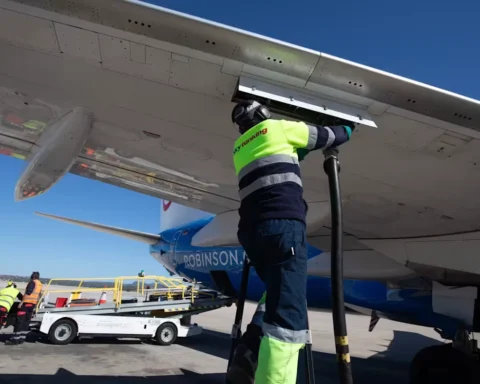
Europe’s aviation sector is facing a growing threat of jet fuel shortages. According to the Financial Times, citing industry sources, if disruptions in the Strait of Hormuz persist, the EU could face a “systemic” jet fuel deficit within the next three weeks.
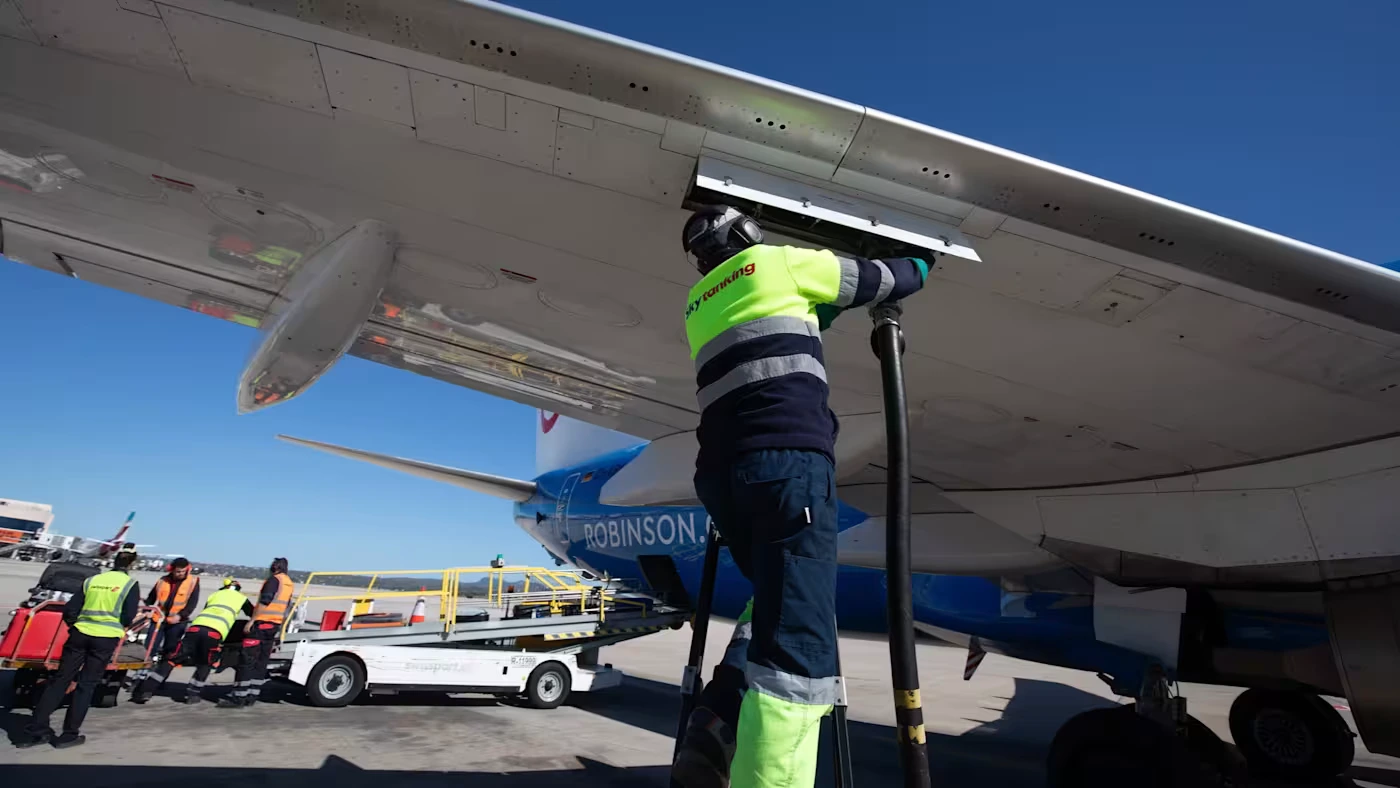
The ACI Europe, which represents EU airports, has warned that fuel reserves are rapidly declining. Additional pressure is coming from “the impact of military activity on demand,” further straining supply balances.
In a letter to EU Transport Commissioner Apostolos Tzitzikostas, the industry expressed “growing concerns over the availability of jet fuel” and called for urgent action from Brussels. “If passage through the Strait of Hormuz does not resume in a significant and stable way within the next three weeks, a systemic jet fuel shortage in the EU will become a reality,” the letter stated.
Rising prices and early restrictions are already reshaping the market
The situation is further complicated by the approaching summer season — a critical period for Europe’s tourism-driven economies. Air travel underpins entire sectors, meaning any disruption could trigger a cascading economic impact.
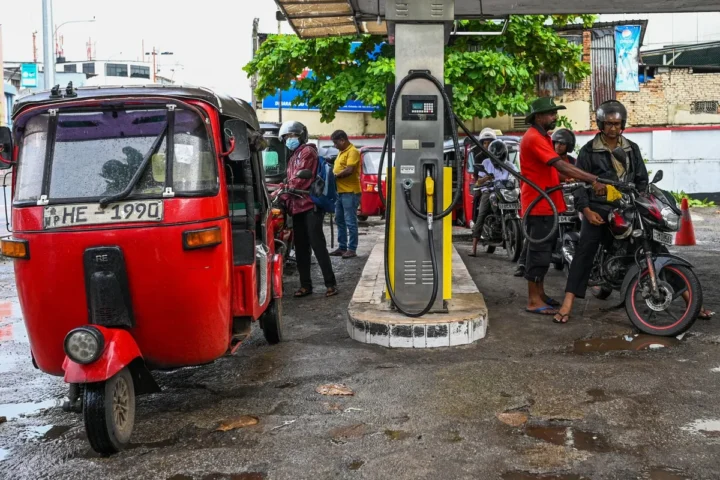
While Europe has not yet experienced widespread shortages, unlike some Asian countries such as Vietnam, fuel prices have surged sharply. According to Argus Media, jet fuel prices in northwest Europe have climbed to about $1,573 per tonne, compared with roughly $750 before the conflict.
Airlines say they still have enough fuel for several weeks, but suppliers are no longer able to guarantee steady deliveries into May. Early signs of disruption are already visible: last weekend, four Italian airports introduced fuel restrictions following issues with a key supplier.
Industry experts warn that even a short-term supply disruption could severely affect the entire system. “A supply crunch would significantly disrupt airport operations and air connectivity,” ACI Europe noted, pointing to the risk of serious economic consequences for both regions and the EU as a whole.
Rising fuel costs are already forcing airlines to adjust operations. Some routes are becoming unprofitable, leading to service cuts. Delta Air Lines, for example, announced a 3.5% reduction in capacity and expects an additional $2 billion in fuel costs in the second quarter. Similar measures are being taken by Air New Zealand and LOT Polish Airlines, which is already preparing to raise ticket prices.
Industry representatives emphasize that a key issue is the lack of a unified EU-wide system for monitoring fuel supply. Without coordination and transparency, the situation could quickly spiral out of control—especially if disruptions in the Strait of Hormuz persist.
This article was prepared based on materials published by The Financial Times. The author does not claim authorship of the original text but presents their interpretation of the content for informational purposes.
The original article can be found at the following link: The Financial Times.
All rights to the original text belong to The Financial Times.