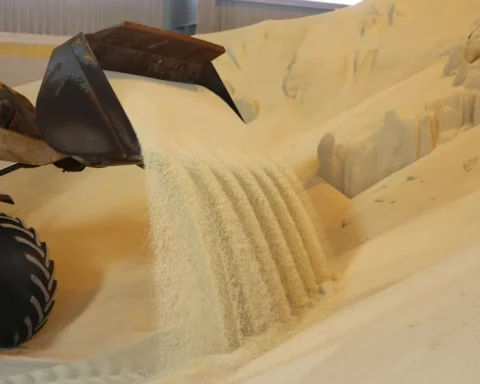
The conflict around Iran has unexpectedly reshaped the global fertilizer market. While Gulf countries are facing disruptions in production and logistics, Russia finds itself in a more advantageous position — and is gradually strengthening its influence.
The main blow has hit supply routes through the Strait of Hormuz. For the region, this is a critical artery: a significant share of fertilizer exports passes through it. Disruptions immediately pushed prices higher — urea, a key global benchmark, has surged by more than 40%, exceeding $670 per tonne.
Against this backdrop, Russia — whose supplies do not depend on Hormuz — appears to be a more reliable supplier. As SovEcon head Andrey Sizov noted, “Russia is one of the main beneficiaries, because this is not just about oil and gas, but fertilizers as well.” According to him, price increases are spreading across the entire agricultural chain, while Russia still has substantial reserves.
Europe Faces Another Choice
The price surge has been quickly felt in Europe. Restrictions on Russian fertilizers introduced after the war in Ukraine have already reduced supply volumes. Now, amid shortages within the EU, debates are intensifying over whether to maintain a hard line or reconsider those restrictions.
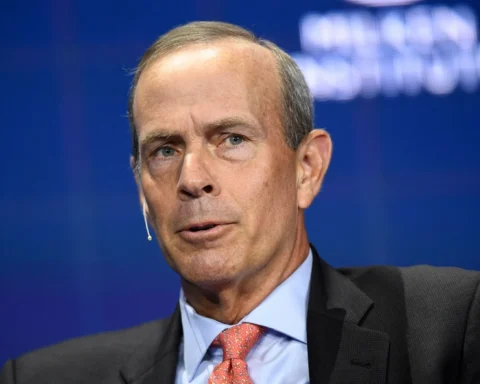
In Budapest, the issue is being raised bluntly. Hungary’s Agriculture Minister István Nagy has warned the European Commission that limited access to affordable fertilizers could lead to lower crop yields and rising food prices. Countries dependent on imports of phosphorus and potash are particularly vulnerable.
Russia Strengthens Its Position — But Not Without Limits
Russia already holds a strong position in the global market: nearly a quarter of ammonia exports, a significant share of urea, and — together with Belarus — dominance in potash. The current crisis is only reinforcing this role.
However, Russia cannot fully replace Middle Eastern supplies. Even with increased production, its share of global urea trade is estimated at around 15–16%, while Gulf producers account for roughly a third.
Moreover, growth potential is limited. Facilities are already operating near capacity, and part of production is tied to military needs. There are also risks linked to attacks on infrastructure.
Fertilizers as a Tool of Influence
At the same time, Moscow is actively leveraging the situation. A temporary halt to ammonium nitrate exports for the domestic market has shown that Russia can flexibly manage supply and influence prices.
In the Kremlin, this is seen as part of a broader trend. Kirill Dmitriev, a special envoy for economic cooperation, wrote that the world is entering an “era of extreme scarcity,” where Russia’s role as a supplier will only grow. As he put it, “as global supply chains break down, even Russia’s adversaries will increasingly recognize its importance.”
Pivot Toward the Global South
This dynamic is especially visible in Asia and Africa. For many countries there, fertilizers are not a geopolitical issue but a matter of harvests and food security. As analyst Alexandra Prokopenko noted, “an official in an Asian or African country who urgently needs urea before the monsoon does not discuss Ukraine — he calls the Kremlin.”
This is where Russia gains an additional lever of influence. The ability to ensure supplies in a volatile market translates into political capital.
A Crisis Working in Moscow’s Favor
While the West debates sanctions and restrictions, market dynamics themselves are beginning to favor Russia. Supply disruptions, rising prices, and import dependence all increase the value of those who can offer stability.
As a result, Moscow has an opportunity to convert economic advantage into geopolitical leverage. And although its capabilities are not unlimited, the current crisis shows that in times of global instability, the role of a reliable supplier of basic resources can outweigh even the strongest political narratives.
This article was prepared based on materials published by The Financial Times. The author does not claim authorship of the original text but presents their interpretation of the content for informational purposes.
The original article can be found at the following link: The Financial Times.
All rights to the original text belong to The Financial Times.