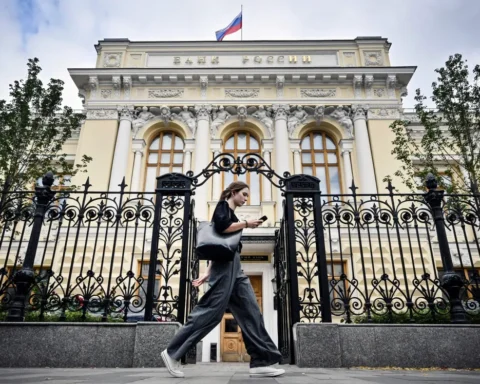
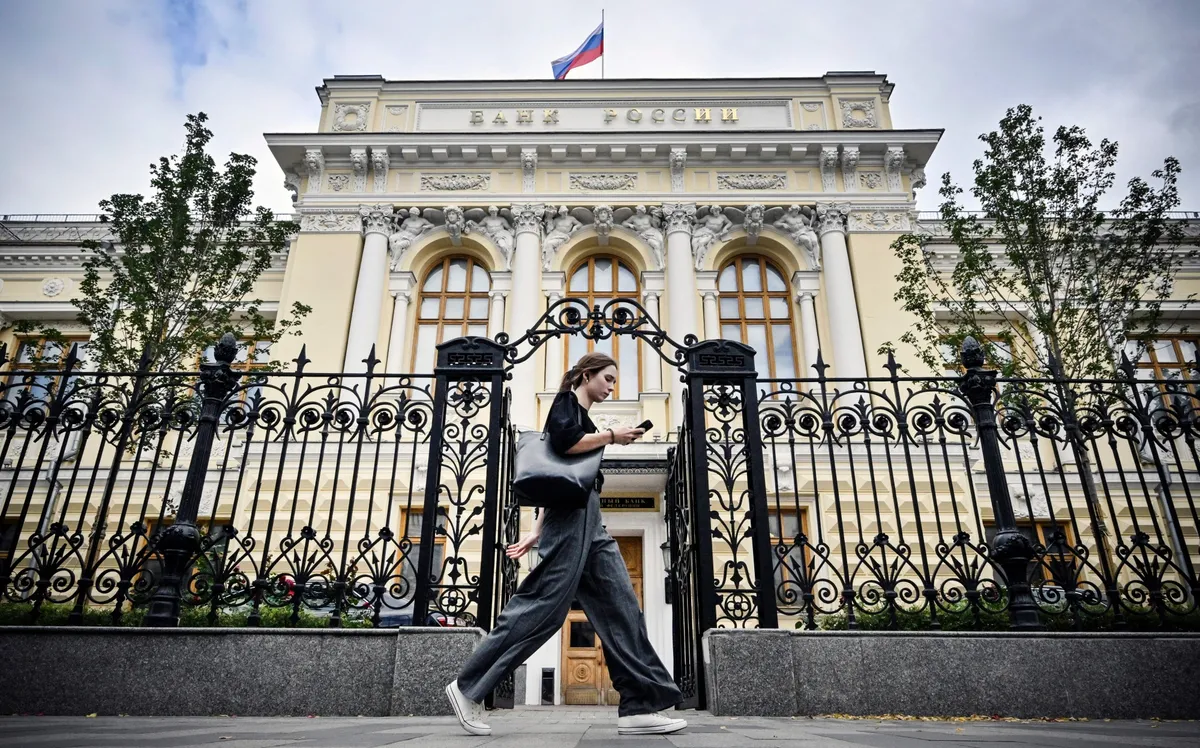
According to Bloomberg, the Bank of Russia is set to continue its monetary easing cycle, though with restraint given persistent inflation risks and external uncertainty. The key rate is expected to be lowered to 15% at the upcoming meeting, marking another step to support a slowing economy.
Most economists surveyed anticipate a 50 basis-point cut, while only a few expect a more modest move to 15.25%. The regulator has previously noted that easing inflation creates room for policy relaxation, but has emphasized the need for caution.
Slowing Inflation and Signs of Economic Cooling
According to the Bank of Russia, price growth slowed significantly in February, approaching the 4% target. Based on the latest weekly data, annual inflation eased to 5.8%.
At the same time, signs of economic strain are becoming more pronounced under the weight of high interest rates. GDP contracted in January, and although the Economy Ministry attributed this to technical factors, business sentiment continues to decline across nearly all sectors.
“As such low levels of the business climate, the economy has typically either been in recession or hovering on the brink of stagnation,” said Dmitry Polevoy, investment director at Astra Asset Management. In his view, this scenario is unfolding in the first quarter, despite the central bank’s more optimistic outlook.
External Factors Complicate the Outlook
Geopolitical tensions, particularly the conflict in the Middle East, are adding further uncertainty. On one hand, disruptions to shipping through the Strait of Hormuz are supporting global commodity prices, including Russian exports, partially offsetting fiscal risks.
On the other hand, economists warn of mounting inflationary pressure over the longer term. Olga Belenkaya, an analyst at Finam, noted that the conflict could lead to higher transportation costs, supply chain disruptions, and rising prices for imported goods.
Business Concerns Grow, Calls for Stronger Action
Large businesses are increasingly concerned about the economic outlook. “We need to abandon illusions — this sudden conflict won’t bring anything good to Russia,” said Oleg Deripaska. He argued that the key rate should be reduced to 6% within the next six months to help the economy weather the crisis without major losses.
However, Central Bank Governor Elvira Nabiullina has repeatedly stressed that policy remains focused on achieving the 4% inflation target under any geopolitical scenario. The regulator also cautions that the recent slowdown in inflation may prove temporary.
Fiscal Policy and the Ruble Remain Key Factors
Budget dynamics will play a critical role in shaping future decisions. Russia is revising its fiscal rule, under which shortfalls in oil revenue are covered by reserves when export prices fall below $59 per barrel. The threshold may be lowered, potentially leading to cuts in government spending.
If the Finance Ministry succeeds in curbing expenditures, it would help contain inflation. Otherwise, the pace of rate cuts may slow, and monetary policy could remain tighter for longer than expected.
At the same time, the ruble has weakened. In March, it declined by about 10%, reaching roughly 84.8 per dollar—its lowest level in around six months. Rising inflation expectations are also adding pressure to the central bank’s decision-making.
As Andrey Gangan, head of the monetary policy department, noted, if the ruble’s weakness begins to “generate elevated pro-inflationary risks,” it will directly influence the pace of further easing.
Balancing Growth Support and Inflation Control
The Bank of Russia now faces a delicate balancing act: supporting economic activity through rate cuts while maintaining control over inflation. In the current environment, future policy moves will largely depend on external developments and the trajectory of domestic indicators.
This article was prepared based on materials published by Bloomberg. The author does not claim authorship of the original text but presents their interpretation of the content for informational purposes.
The original article can be found at the following link: Bloomberg.
All rights to the original text belong to Bloomberg.