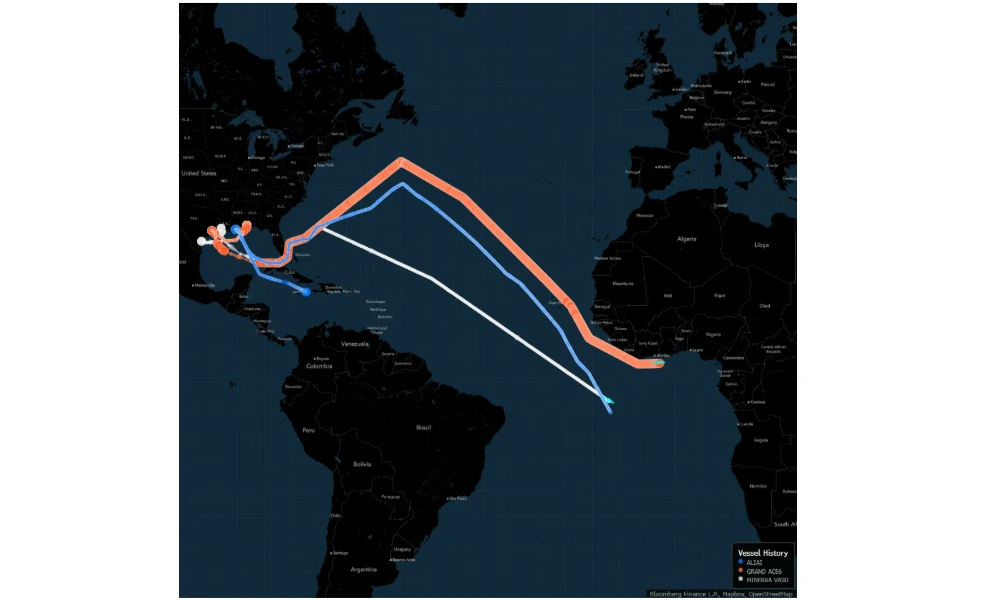
Amid the war involving Iran, the global refined fuels market is becoming increasingly volatile. According to Bloomberg, several tankers carrying diesel that had departed from the US toward Europe in recent weeks have sharply changed course in the Atlantic. This is another sign of intensifying competition for limited fuel supplies and the breakdown of established trade routes.
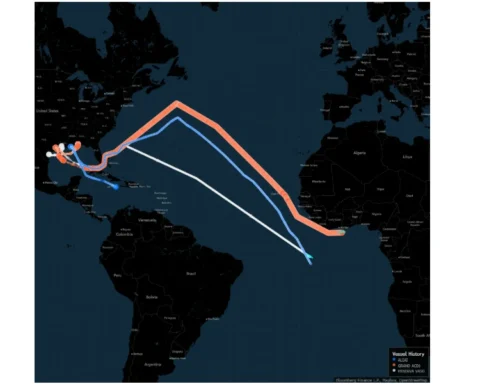
The vessels involved include the Aliai, Minerva Vaso and Grand Ace6. All three loaded diesel-type fuel in the US and were initially heading toward Europe. Two of the tankers had signaled Amsterdam as their destination, while another was bound for Gibraltar. However, their routes have since changed: the Grand Ace6 is now signaling Lomé in Togo, while the other two vessels have shifted southeast.
Such mid-ocean diversions highlight how quickly traders and shipowners are responding to changes in pricing, risk and route availability. In effect, the market is moving into a crisis-driven reallocation mode, where cargoes are redirected not to their original destinations, but to locations offering better economics or lower logistical risks.
Europe faces growing risk of diesel shortages
According to Bloomberg, the situation is particularly concerning for Europe. Supplies in Asia are already under significant strain, while Europe could face diesel shortages in the coming weeks if normal traffic through the Strait of Hormuz is not restored.
For Europe, this is not just a price issue. Diesel remains a critical fuel for freight transport, industry, agriculture and parts of the utilities sector. As a result, any disruption quickly spills beyond energy markets, affecting logistics costs, industrial output and ultimately consumer prices.
Rising product prices and tanker diversions in the Atlantic suggest that the market is already operating under crisis conditions. If tensions in the Middle East persist, Europe may face not only higher fuel costs but also a physical shortage of supply.
This article was prepared based on materials published by Bloomberg. The author does not claim authorship of the original text but presents their interpretation of the content for informational purposes.
The original article can be found at the following link: Bloomberg.
All rights to the original text belong to Bloomberg.