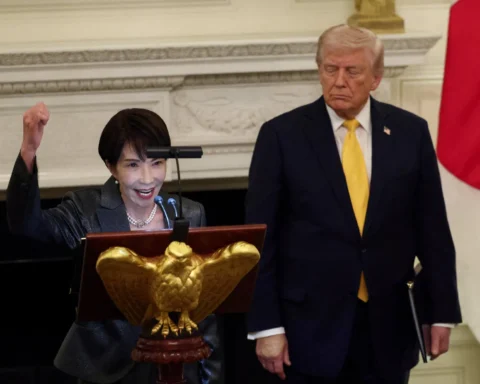
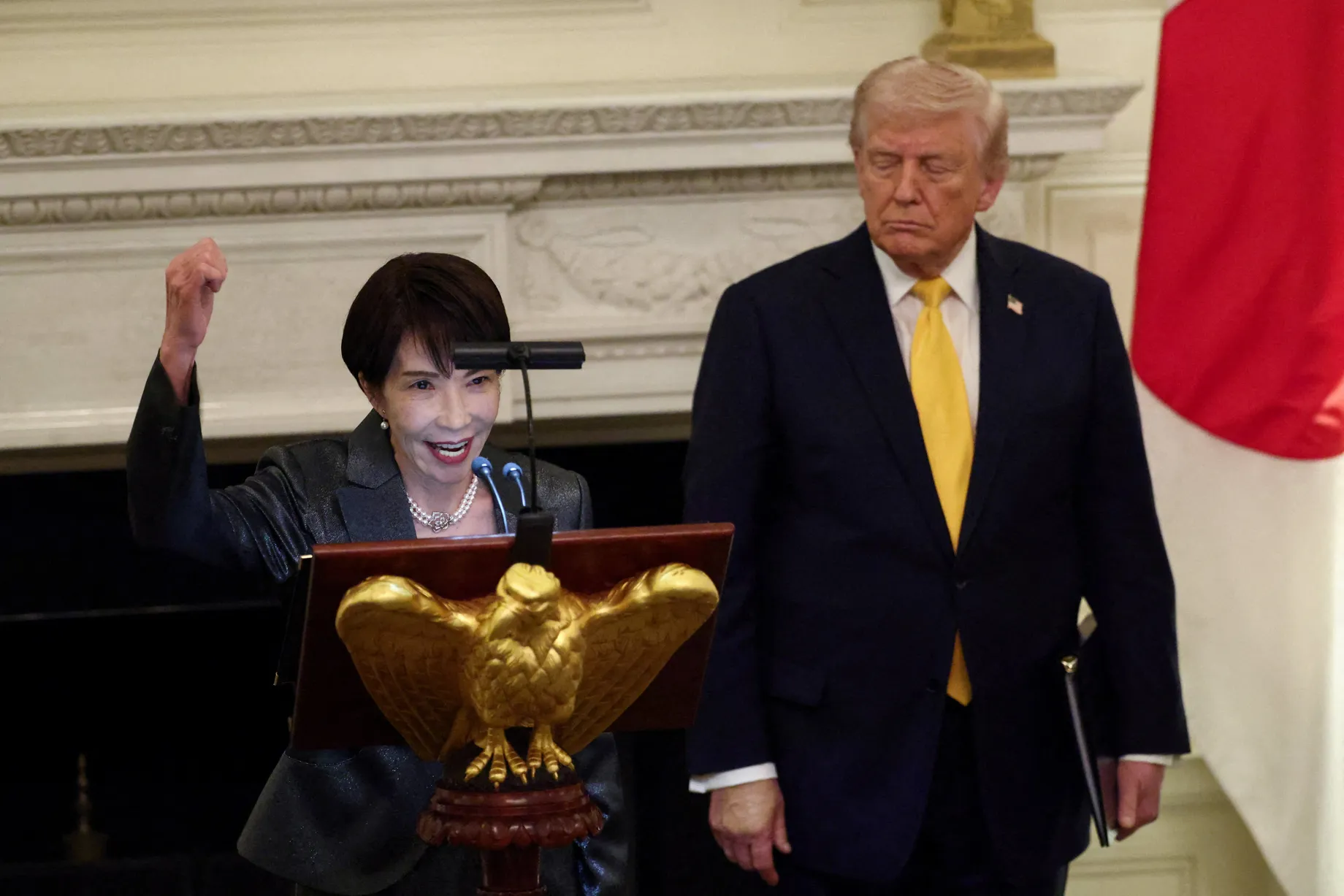
According to Der Spiegel, Washington and Tokyo are not just announcing another investment package — they are shaping a longer-term energy partnership with clear political undertones. During Japanese Prime Minister Sanae Takaichi’s visit to the United States, both sides unveiled projects worth tens of billions of dollars, spanning nuclear power and gas generation. At stake is more than infrastructure: both countries are trying to secure stable energy prices while positioning themselves in an increasingly competitive technological landscape.
The numbers alone are striking. Around $40 billion is earmarked for nuclear projects in Tennessee and Alabama, while another $33 billion will go into gas-fired power plants in Pennsylvania and Texas. Yet the logic behind these investments matters more than the scale. Energy, once treated largely as a domestic economic issue, is now firmly embedded in broader geopolitical strategy.
Small reactors, big ambitions
At the center of the agreement are small modular reactors, or SMRs — a technology that has been gaining traction as a more flexible alternative to traditional nuclear plants. Unlike large-scale reactors, SMRs are designed to be easier to deploy and integrate into modern energy systems, particularly where stable baseline power is needed without long construction timelines.
In their joint statement, the US and Japan frame these reactors as part of the next generation of reliable energy. The expectation is not only to strengthen energy security but also to support long-term economic growth. For Washington, there is an additional layer: reviving nuclear energy as a pillar of industrial policy rather than a relic of the past.
Japan’s role is equally telling. Despite its historically cautious stance on nuclear power, Tokyo is increasingly re-engaging with the technology as a tool of economic resilience. Participation in US-based projects allows Japan to act not just as an investor, but as a full-fledged technological partner.
Gas still matters
One detail in the agreement stands out. Alongside nuclear investments, both countries are committing billions to gas-fired power plants. This suggests a pragmatic approach rather than a purely forward-looking bet on one technology.
Nuclear energy may promise long-term stability, but gas remains a crucial component for flexibility. It can be deployed faster, scaled more easily, and used to balance fluctuations in demand. In practice, the US and Japan appear to be building a hybrid model — one that prioritizes resilience over ideological purity.
The trade dimension behind the deal
These projects do not exist in isolation. Last year, Japan pledged to invest up to $550 billion in the US economy in exchange for more favorable trade conditions. In February, Japanese firms announced an initial tranche of $36 billion.
Seen in this context, the energy agreement looks like a continuation of that broader economic exchange. Energy infrastructure becomes a kind of anchor — a sector where long-term commitments signal trust between partners. It is no longer just about supply and demand, but about aligning strategic interests.
China is part of the equation — even if not always mentioned
While the agreement formally involves only the US and Japan, its implications extend further. Washington, Tokyo and the European Union have already signaled their intent to reduce dependence on China for rare earths and other critical materials.
This is closely tied to the energy projects now being announced. Nuclear technology, gas infrastructure, and advanced manufacturing all depend on supply chains that remain vulnerable to geopolitical pressure. China continues to dominate in key areas, particularly in processing critical minerals. Building alternative systems has therefore become a priority for US allies.
More than just an energy story
At first glance, the deal may seem like a conventional investment announcement — another set of large-scale projects between two longstanding partners. But it reflects a deeper shift. Energy is once again being treated as a matter of national security, industrial policy and alliance-building.
That may be the real significance of the agreement. The US gains capital inflows and an opportunity to expand its energy base. Japan secures a stronger foothold in the American market and reinforces its strategic alignment with Washington. Together, they are signaling a broader intention: to shape the infrastructure, technologies and supply chains that will define the next phase of global competition.
According to Der Spiegel, this may only be an early step. If current trends continue, such agreements could form part of a much larger realignment — one in which energy, resources and technology are increasingly organized along geopolitical lines rather than purely economic ones.
This article was prepared based on materials published by Der Spiegel. The author does not claim authorship of the original text but presents their interpretation of the content for informational purposes.
The original article can be found at the following link: Der Spiegel.
All rights to the original text belong to Der Spiegel.