Tariff Cuts as a Signal of De-escalation
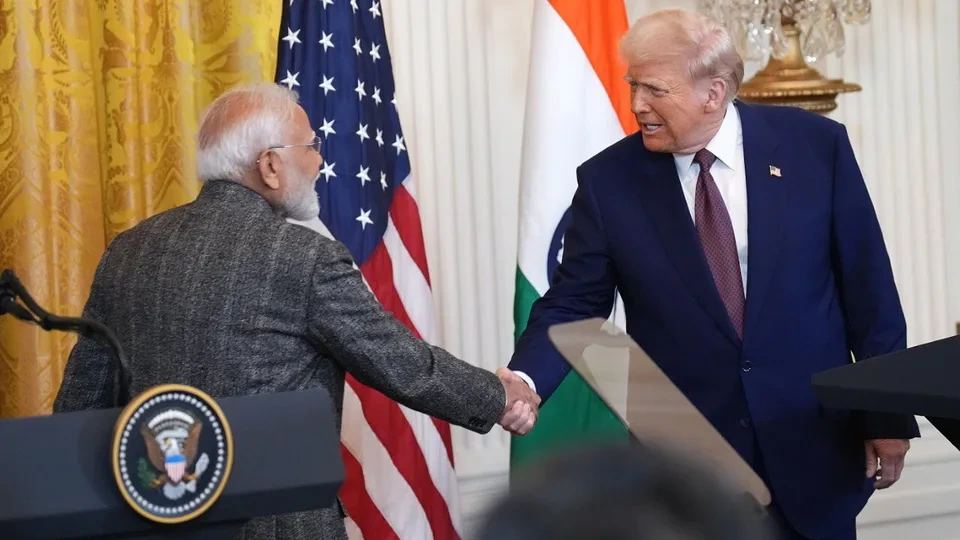
After a prolonged period of trade tensions, the United States and India have announced steps to ease their dispute. On February 2, President Donald Trump said Washington had agreed to significantly reduce tariffs on Indian goods. In return, he argued, New Delhi would adjust its energy policy—most notably with regard to oil imports.
Under the terms outlined by Mr Trump, the so-called “reciprocal” tariff on Indian exports to the United States will fall from 25% to 18%. An additional 25% levy, imposed last August as a punitive measure linked to India’s purchases of Russian oil, is set to be lifted entirely.
New Delhi’s Caution and Diverging Narratives
India’s prime minister, Narendra Modi, confirmed that tariffs would indeed be reduced, but refrained from addressing several key claims made by the White House. He did not endorse Mr Trump’s assertion that India had committed to sharply increasing purchases of American energy and agricultural products—reportedly up to $500bn. Nor did he publicly confirm any pledge to halt imports of Russian oil.
According to The Economist, this restraint reflects New Delhi’s desire to preserve room for manoeuvre. Energy and agriculture remain politically sensitive areas in India, where overt concessions risk domestic backlash.
Russian Oil as the Core Source of Friction
The most contentious issue in the negotiations remains India’s imports of oil from Russia. Since the start of the war in Ukraine, India has emerged as one of the largest buyers of Russian crude, taking advantage of deep discounts created by Western sanctions. Cheap oil has helped New Delhi contain fuel prices and inflation, making Russian supplies an important pillar of economic stability.
Washington sees the issue differently. Mr Trump has repeatedly argued that purchases of Russian oil “effectively finance the war”, and this rationale underpinned the decision to impose the additional tariff on Indian goods. As a result, India’s energy ties with Russia have become a lever in America’s broader trade strategy.
In The Economist’s assessment, India finds itself caught between Western geopolitical expectations and its own pragmatic interests. New Delhi has refused to join sanctions against Moscow and insists on its right to shape its energy mix independently. Yet growing reliance on Russian oil is increasingly carrying political and economic costs—particularly in relations with the United States and Europe.
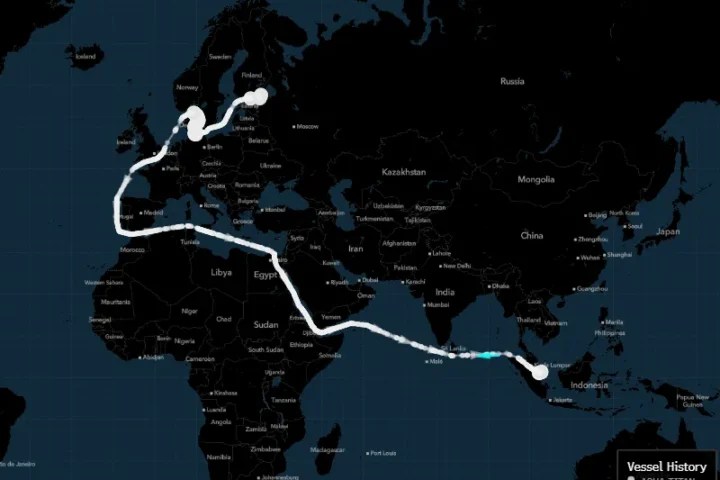
Recent months suggest a cautious adjustment rather than a sharp break. Fewer Russian tankers have been arriving at Indian ports, and India’s oil minister, Hardeep Singh Puri, has hinted at increased purchases from alternative suppliers, including Venezuela and Middle Eastern producers. The shift appears incremental, aimed at diversification rather than outright disengagement.
Economic Impact: Limited but Meaningful Relief
For India, the easing of trade restrictions with the United States is likely to have more symbolic and investment-related significance than an immediate economic impact. The country weathered tariff pressure relatively well: it is not a major exporter of manufactured goods, aside from niche sectors such as textiles and gem processing. Key products—including smartphones and generic pharmaceuticals—were exempt from the duties.
Nevertheless, the tariffs undermined India’s hopes of benefiting from the reconfiguration of global supply chains, as multinational firms sought to reduce dependence on China. Analysts at HSBC previously estimated that combined US tariffs could shave around 0.7 percentage points off India’s annual growth.
Political Context and a Gradual Thaw
Relations between Washington and New Delhi during Mr Trump’s second term have been uneven. His election victory in 2024 was initially welcomed in India, and in February 2025 he and Mr Modi discussed expanding trade ties during talks in Washington. Negotiations later stalled, however, and the subsequent imposition of tariffs sharply worsened the atmosphere.
Tensions were further inflamed by Mr Trump’s claims that he had played a decisive role in resolving a conflict between India and Pakistan in May 2025—an assertion firmly rejected by Indian officials. Only in recent months has dialogue begun to recover, aided in part by the arrival of a new US ambassador in New Delhi.
Market Reaction and the Key Question Ahead
Financial markets responded cautiously positively to news of the trade truce. Last year, the Indian rupee was among the weakest major currencies against the dollar, partly due to foreign capital outflows. Following Mr Trump’s announcement, the rupee strengthened, while the GIFT Nifty index—tracking futures on India’s largest companies—rose.
India has managed the trade confrontation with the United States relatively well. The central question now is whether the current truce will endure. Much will depend on how far New Delhi is willing to go in recalibrating its energy relationship with Russia—and on how long Washington considers those steps sufficient.
This article was prepared based on materials published by The Economist. The author does not claim authorship of the original text but presents their interpretation of the content for informational purposes.
The original article can be found at the following link: The Economist.
All rights to the original text belong to The Economist.