The U.S. Delegation Arrives, but No Meeting Takes Place
The visit of Steve Witkoff and Jared Kushner to Moscow began with a deliberate pause. The private jet carrying the two well-known American businessmen landed at Vnukovo-2 early in the day, yet their talks with Russian President Vladimir Putin were scheduled only for late evening. Throughout this time, the American envoys — representatives of President Donald Trump — were left waiting while the Russian leader attended other public events.
According to Der Spiegel, the delay was no coincidence but part of a diplomatic tactic: “Putin immediately showed who sets the pace of the negotiations by making the Americans wait for hours before entering the Kremlin.”
While Putin Speaks at a Forum, the Envoys Stroll Through Moscow
Kremlin intermediary Kirill Dmitriev, head of the Russian Direct Investment Fund, filled the waiting time by guiding the visitors through the center of Moscow, showing them the city’s festive New Year decorations. State television broadcast images of Witkoff and Kushner strolling calmly across the Red Square, adorned for the holidays.
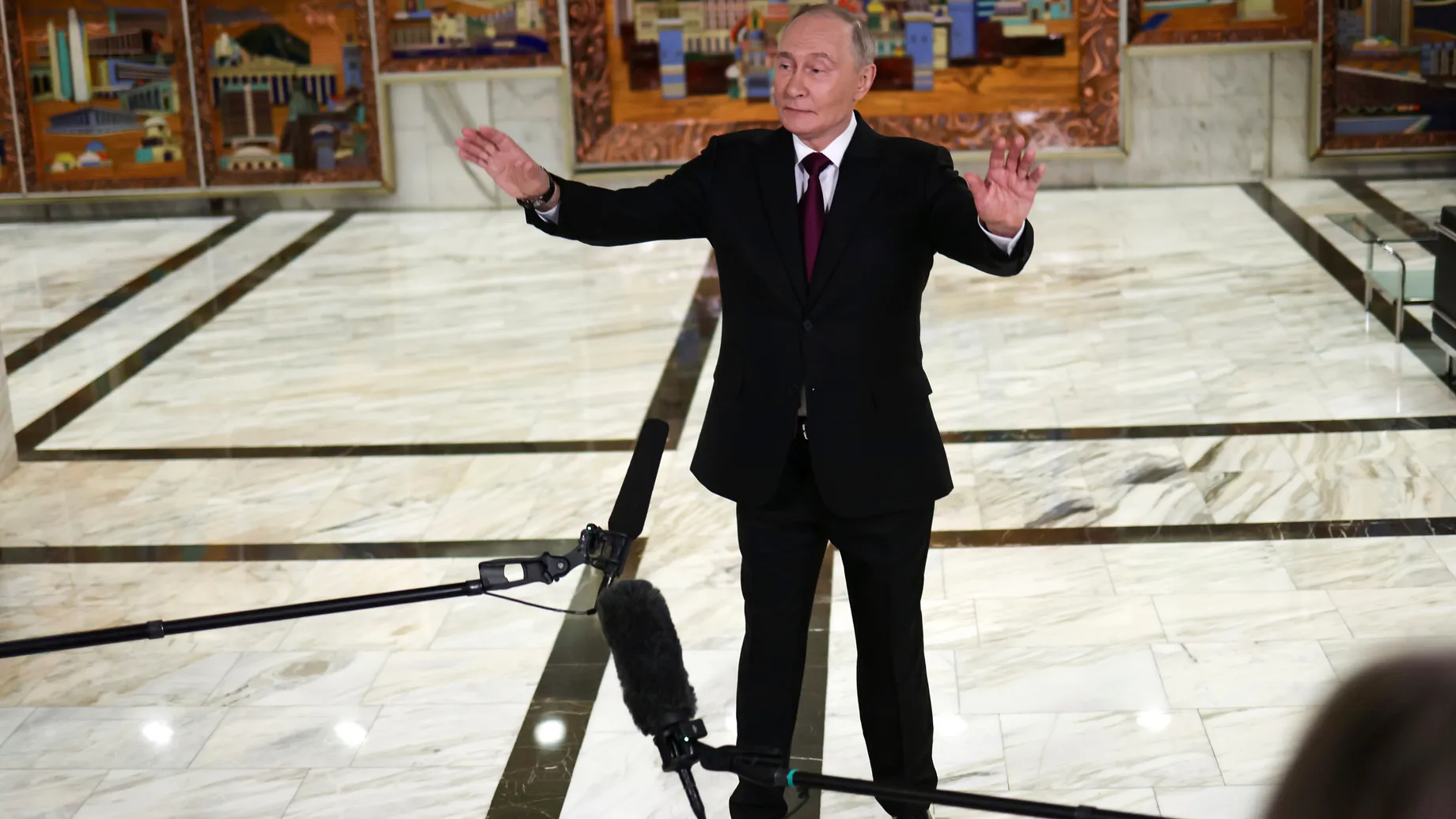
Meanwhile, Putin spoke at a banking forum, emphasizing that he had priorities more important than the arrival of the American delegation. This gesture became the first element of the tone the Kremlin intended to set for the entire negotiation process.
Trump Hopes for a “Deal,” While Europe Remains Alarmed
Before the visit, President Donald Trump expressed confidence that “there is a good chance” to reach an agreement with Moscow. The new American peace proposal — a 28-point plan — was expected to form the basis of the talks.
However, the reaction in Kyiv and European capitals was the opposite of Washington’s optimism. Ukrainian officials feared that the U.S. might push Kyiv into a compromise favorable to Moscow. European leaders urgently coordinated positions with President Volodymyr Zelensky to prevent potential pressure on Ukraine.
The Talks Begin at 19:47 — and Only Then
Only at 19:47 Moscow time did the doors of one of the Kremlin halls finally open to the American visitors. As is customary, the meeting began with a brief exchange of ceremonial remarks in front of television cameras.
“We had a wonderful walk, an amazing city,” Witkoff said. Putin responded that “the Moscow authorities have every reason to be proud of the city’s development.”
After that, the press was asked to leave — and the real discussion began behind closed doors.
Five Hours Without a Breakthrough
The talks lasted more than five hours — well past midnight. But the result was predictable: no major breakthrough was achieved.
Putin’s adviser Yuri Ushakov stated:
“There is no compromise version. Some proposals are useful, others unacceptable. There is much work ahead.”
According to Russian media, the U.S. side submitted several additional documents besides the main plan. However, both delegations agreed not to disclose the content of the discussions.
After the meeting, Witkoff headed to the U.S. Embassy — presumably to brief President Trump.
Putin Once Again Uses the Tactic of Waiting
The German magazine emphasized that Putin “leaves the West suspended in uncertainty once again.” According to Der Spiegel, the Russian leader prefers to “create movement without committing to real movement” — convening talks, speaking of readiness for dialogue, but avoiding substantive answers.
Even before the negotiations, Putin declared at a press conference that Europe, not Moscow, was blocking the peace process. He insisted that Russia was conducting a “surgical operation” in Ukraine and “not a war,” adding that Moscow was ready to fight Europe if “Europe starts attacking.” He avoided mentioning his own repeated nuclear threats.
Signals From the Front: Russia Increases Pressure
On the eve of the talks, the Kremlin released a video showing Putin in military uniform listening to generals reporting on advances along the front. Putin claimed that pressure on Ukrainian positions had increased — a message that hardly aligned with gestures of peace.
The American side, however, maintained cautious optimism. A day earlier, Witkoff, Kushner, and Secretary of State Marco Rubio met with a Ukrainian delegation at a luxury golf club near Miami, owned by Witkoff, to refine the peace proposal.
Unconventional Diplomacy: A Business Approach Instead of State Department Channels
The involvement of Witkoff and Kushner sparked debate. Negotiations of this scale are normally handled by diplomats, yet Trump entrusted the mission to two individuals who recently helped arrange a temporary agreement between Israel and Gaza.
“If we can solve the Russia-Ukraine issue, everybody will be leaping for joy,” Witkoff said in one of the phone conversations intercepted by the Russian side.
Meanwhile, as The Wall Street Journal reported, several American companies were quietly exploring the possibility of resuming business in Russia. According to the newspaper, the Kremlin had prepared a strategy to present Russia “not as a military threat but as a country filled with business opportunities.”
Kirill Dmitriev played a central role in this strategy, escorting the American envoys and participating in the talks.
Business as a “Shield Against Conflict”? Europe Isn’t Convinced
Witkoff stated that Russia, Ukraine, and the United States could become economic partners:
“If everyone enjoys prosperity, it will naturally act as a barrier against future conflicts.”
European leaders viewed this vision critically. Polish Prime Minister Donald Tusk remarked:
“We understand this is not about peace. It is about business.”
The Sixth Attempt — and the Same Outcome
Witkoff had already flown to Moscow five times this year for hours-long conversations with Putin. The sixth visit brought the same result — no progress.
According to Der Spiegel, two conclusions are clear:
- Putin continues to stall, demonstrating that the pace of negotiations is set in Moscow.
- Russia seeks to improve relations with the United States, while refusing to shift its position on Ukraine.
Putin himself recently stated that “time is needed to seriously discuss certain things” and to “translate proposals into diplomatic language.”
This phrasing leaves little room for hope: a swift peace remains unlikely.
This article was prepared based on materials published by Der Spiegel. The author does not claim authorship of the original text but presents their interpretation of the content for informational purposes.
The original article can be found at the following link: Der Spiegel.
All rights to the original text belong to Der Spiegel.