U.S. President Donald Trump has announced an imminent summit between Vladimir Putin and Volodymyr Zelensky. Yet, as Der Spiegel points out, the American leader does not fully grasp the essence of the conflict: the Kremlin is pursuing very different goals and continues to create brutal “facts on the ground” in Ukraine.
Delaying the Talks: The Kremlin’s Tactic
Speculation is already swirling about the possible location of a future meeting. Budapest, under Prime Minister Viktor Orbán — one of Putin’s most loyal allies inside the EU — is one candidate. Another is Geneva, suggested by Emmanuel Macron, symbolically echoing the Cold War summits once held there between Washington and Moscow.
Swiss Foreign Minister Ignazio Cassis went so far as to suggest that Putin could be granted immunity during potential negotiations. But this diplomatic “insurance” looks naive: the International Criminal Court has already issued an arrest warrant against the Russian leader for the deportation of Ukrainian children, and the Kremlin would hardly allow a situation where this issue comes to the forefront.
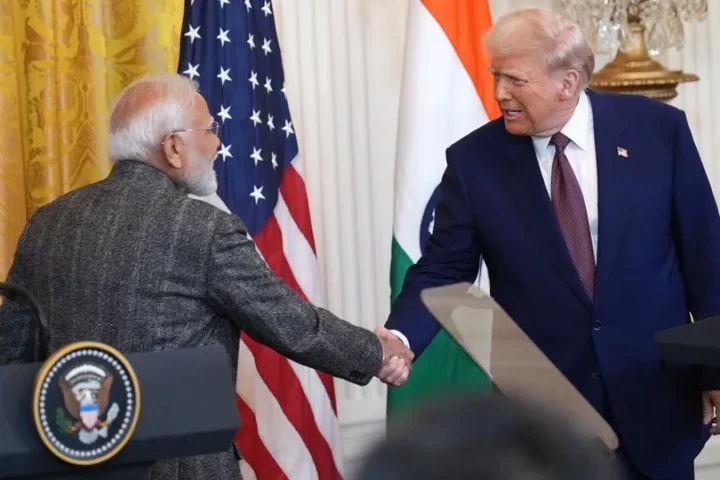
Trump, emboldened by his phone call with Putin, confidently declared: “Within two weeks there will be a meeting, followed by a trilateral summit.” But Moscow’s rhetoric is very different. According to political analyst Tatiana Stanovaya, Putin is not interested in a meeting for dialogue’s sake. He wants Zelensky to appear only when Ukraine is ready to capitulate.
Imperial Logic and Putin’s Goals
For Putin, Ukraine is not an independent neighbor but a barrier. A buffer zone against NATO, a “sanitary cordon” designed to push the West away.
In 2021, he published an essay attempting to rewrite history, insisting that Ukrainian statehood was a fiction and that Ukrainians and Russians were “one people.” This text became the ideological foundation for war.
Since then, the Kremlin has acted consistently. Putin regularly demands “neutrality” from Ukraine, which in practice means renouncing NATO membership. At the same time, he openly shows contempt for Zelensky, branding him “illegitimate” and insulting him as a “drug addict” and a “Nazi.”
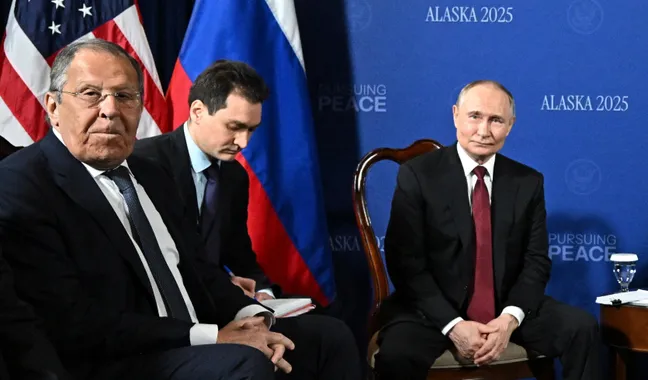
Even Foreign Minister Sergey Lavrov plays into this propaganda theater. When he flew to Alaska for talks, his outfit caused a stir: a white sweater emblazoned with the letters “USSR.” It was a deliberate provocation. Later, sitting next to Trump, Putin sarcastically quipped: “An imperialist,” bursting into laughter when U.S. Secretary of State Marco Rubio complimented the “nice shirt.”
Such details illustrate the Kremlin’s style: send a signal, provoke, then trivialize it with a joke.
Facts on the Ground: Military Pressure
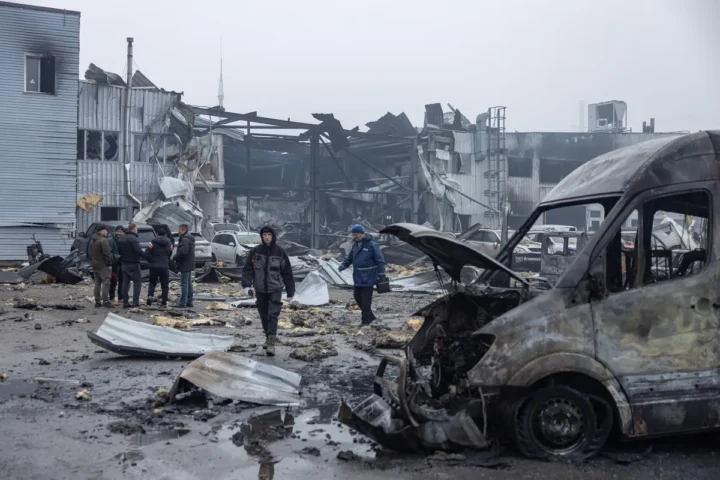
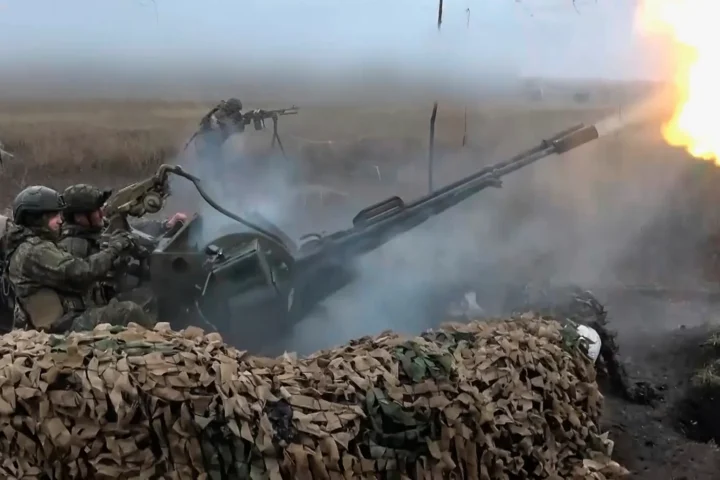
Meanwhile, as diplomats debate “formats for negotiations,” the Russian army methodically shifts the front line. On the night of Trump’s White House summit with Zelensky, Ukrainian officials reported fresh Russian strikes: eight killed, 53 injured.
The Kremlin’s strategy is clear: while discussions about “peace initiatives” drag on, the army seizes new positions. Each new line of contact then becomes a “new reality” that Kyiv is forced to negotiate over.
Putin’s minimum goal remains the capture of Donbas. The failed blitzkrieg in February 2022 made him more cautious but no less persistent. Now the Kremlin’s strategy resembles creeping expansion: slow but steady.
What’s striking is that Trump, perhaps unwittingly, echoes the Kremlin’s logic: without territorial concessions, he argues, no quick peace is possible. In practice, this means Washington is beginning to play by Moscow’s rules.
Dividing Allies and Negotiation Deadlock
The Kremlin’s main bet is not negotiations with Kyiv but sowing discord among Ukraine’s allies.
Already, European voices diverge. Some governments propose sending troops to Ukraine after a possible peace deal to guarantee protection against a renewed Russian attack. Moscow reacted sharply, calling this plan “categorically unacceptable” and warning of “uncontrollable escalation.” It was a veiled threat — a hint that Russia is ready to expand the war further.
According to Tatiana Stanovaya, Trump misreads the strategic frame. For him, it is a war between Russia and Ukraine. For Putin, it is a war against the West, with Ukraine as a mere instrument.
Hence the bleak conclusion: even if Trump manages to secure a peace agreement, the war will not end. Putin will continue exerting pressure, because for him the stakes are higher. It is not just about territory but about reshaping the global order.
This article was prepared based on materials published by Der Spiegel. The author does not claim authorship of the original text but presents their interpretation of the content for informational purposes.
The original article can be found at the following link: Der Spiegel.
All rights to the original text belong to Der Spiegel.