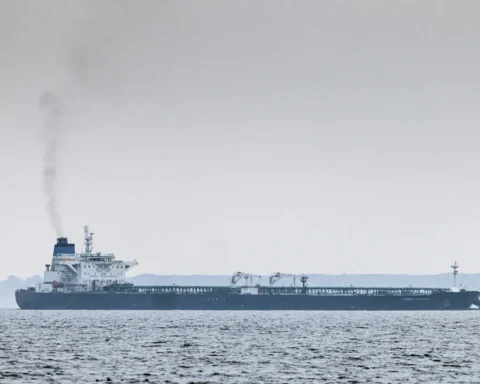

Russia has accelerated oil shipments to global markets amid a sharp rise in prices and a temporary easing of sanctions restrictions. According to Bloomberg, Moscow is seeking to fully capitalize on the situation created by the effective closure of the Strait of Hormuz and the introduction of a temporary US waiver allowing buyers to purchase Russian crude loaded before March 12 without fear of sanctions.
The combination of two factors — rising global oil prices and the expansion of the US sanctions waiver — has created favorable conditions for Russia. According to Bloomberg, this dual effect has allowed Russian exporters to sharply increase revenues and accelerate tanker loadings.
Record Prices for Russian Oil
The surge in purchases has pushed up prices for Russian crude delivered to key markets, particularly India. According to Bloomberg, the price of Russia’s main export blend delivered to Indian refiners reached a record high.
This, in turn, boosted Russian budget revenues. The combined increase in both prices and export volumes produced the largest jump in weekly income since the start of the conflict in Ukraine.
An additional factor behind the rise in shipments was the resumption of operations at the Sheskharis oil terminal in Novorossiysk on the Black Sea. Shipments had been suspended following a Ukrainian drone attack during the night of March 1–2. After the terminal resumed operations, export flows increased sharply.
Sharp Increase in Seaborne Oil Shipments
According to tanker-tracking data compiled by Bloomberg, Russia’s seaborne crude exports averaged about 3.44 million barrels per day in the four weeks to March 15. That is roughly 90,000 barrels per day higher than the previous week, though still about 400,000 barrels per day below the level seen before Christmas.
The weekly surge was particularly notable. In the week to March 15, a total of 37 tankers loaded 27.79 million barrels of Russian crude. The previous week saw 20.18 million barrels shipped on 27 vessels.
On a daily basis, shipments rose to 3.97 million barrels per day — about 1.1 million barrels per day higher than the week before and the highest level in roughly three months.
Sanctions Pause and Changing Routes
A key role in reviving trade was played by the temporary easing of sanctions affecting Indian refiners. According to Bloomberg, the decision altered the routes taken by several tankers.
Some ships heading toward the Strait of Malacca turned around and sailed back toward Indian ports. Other tankers leaving the Red Sea headed directly to refineries on India’s west coast.
These changes are gradually reducing the backlog of tankers carrying Russian crude that had built up in recent months. Since mid-December, about 140 million barrels of oil had been sitting on vessels without a final destination — roughly 60 million barrels more than at the end of August.
Export Revenue Surges
As shipments increased and prices rose, the value of Russia’s exports also climbed sharply.
According to Bloomberg estimates, the average weekly value of Russian exports in the four weeks to March 15 rose to about $1.38 billion, compared with around $1.16 billion a week earlier. This marked the highest level since October.
Prices for Russia’s key export blend, Urals, also increased significantly. According to data from Argus Media, Urals from Baltic ports rose to about $51.96 per barrel, while Black Sea cargoes reached roughly $50.32.
The price of ESPO crude exported from Pacific ports climbed even more sharply to an average of $64.41 per barrel. Delivered prices in India also increased, reaching about $70.23 per barrel.
As a result, Russia’s weekly export revenue rose to roughly $2.07 billion in the week to March 15 — about $890 million higher than the revised figure for the previous week.
Main Export Destinations
Asia remains the primary destination for Russian crude exports. According to Bloomberg, total shipments to Asian customers — including cargoes without a declared final destination — reached about 3.17 million barrels per day.
Many tankers still do not list their final delivery points. Increasingly, vessels indicate interim destinations such as the Suez Canal or Port Sudan, with the final destination only becoming clear once they cross the Arabian Sea.
According to tracking data, shipments to China averaged about 960,000 barrels per day, while flows to India stood at around 480,000 barrels per day. Analysts note that these figures may change, since some tankers alter their routes while already at sea.
Special Routes and Opaque Shipments
Another destination for Russian oil shipments is Syria. Over the past four weeks, flows to the country averaged about 90,000 barrels per day.
According to Bloomberg, estimating these shipments is difficult because tankers heading to the Syrian port of Baniyas often switch off their automatic tracking systems after passing south of Crete. As a result, the actual volumes typically become known only after ships arrive, when satellite images confirm their presence.
At the end of the week, two Russian tankers were anchored off Baniyas, according to satellite data.
This article was prepared based on materials published by Bloomberg. The author does not claim authorship of the original text but presents their interpretation of the content for informational purposes.
The original article can be found at the following link: Bloomberg.
All rights to the original text belong to Bloomberg.