Fragmented Decisions Trigger Systemic Disruptions
Most independent sources believe that Russia’s governance system has entered a crisis phase in implementing policies related to the internet and Telegram. A series of largely uncoordinated decisions has led to disruptions that, in their cumulative effect, resemble a social shock comparable to the mobilization wave of autumn 2023.
At least four parallel developments have converged: Security Council decisions aimed at “sovereignizing” the media space within messaging platforms and tightening control; security measures linked to the ongoing military context; an audit of metropolitan internet communications by the Federal Protective Service (FSO); and attempts to preserve elements of the digital economy under restricted access conditions.
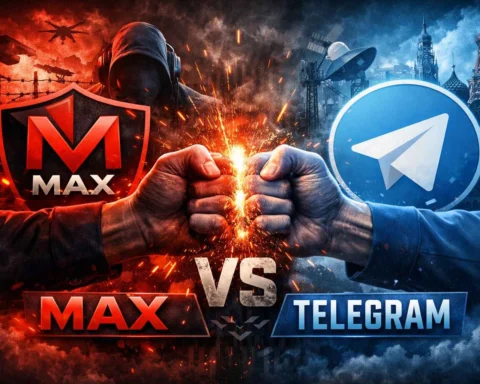
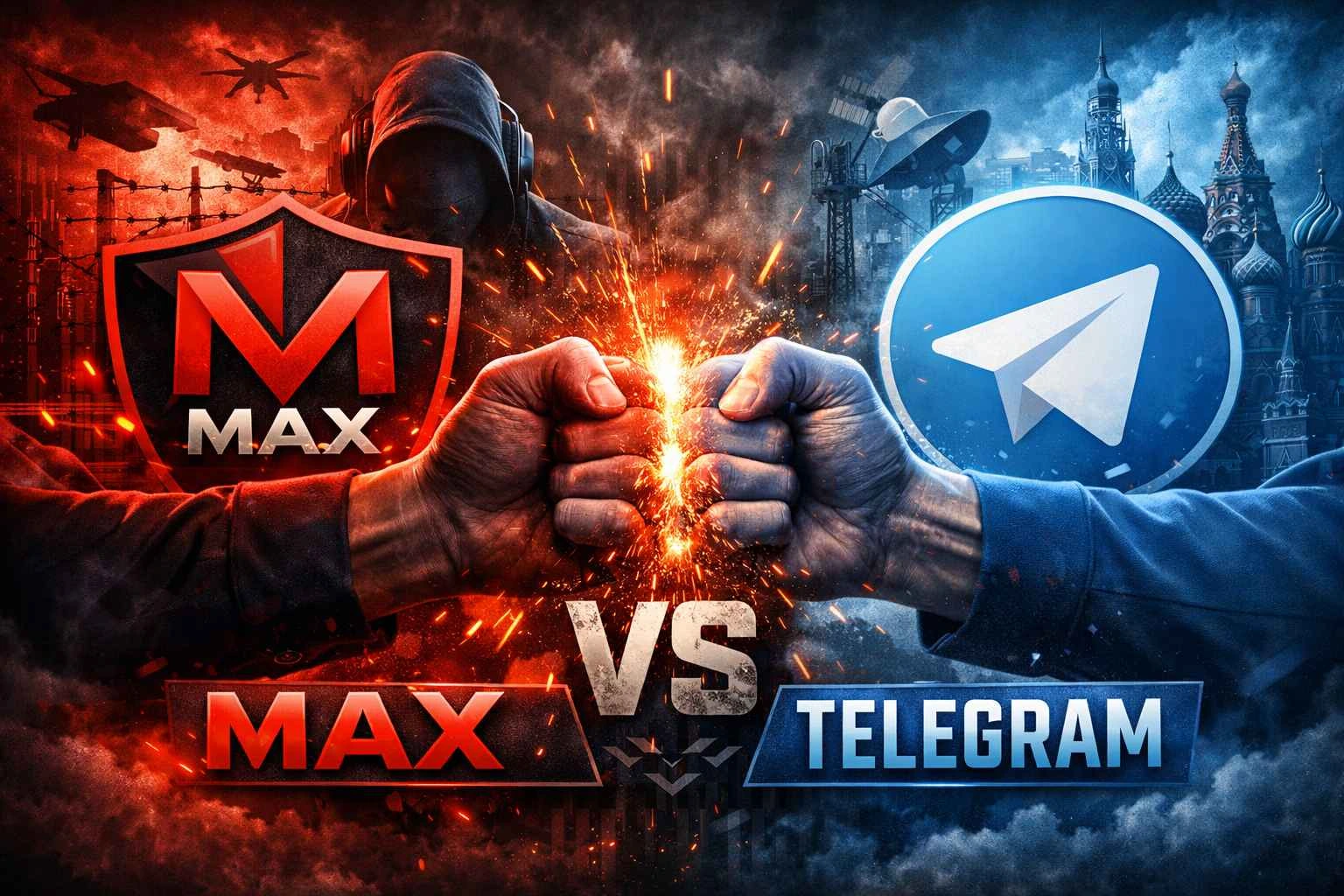
According to sources, in May last year Russia’s Security Council approved a roadmap for internet sovereignty, including plans to limit foreign messaging platforms and promote a domestic alternative, the MAX messenger. “The Security Council emphasized the need for a sovereign platform to distribute content and control users. Telegram, as an uncontrolled information system, was seen as a risk,” one source said.
At the same time, efforts to require Telegram channels to register with the media regulator Roskomnadzor were effectively abandoned after cooperation with Telegram’s founder Pavel Durov failed to materialize. Around 80% of influential channels ignored the requirement, making enforcement impossible. As a result, authorities shifted their focus to developing an alternative platform, although no formal directive to block Telegram was issued.
MAX Messenger and the Struggle for Control
Experts argue that MAX is intended — or could evolve after further updates — into a tool capable of providing authorities with full access to users’ device data. In this context, efforts to promote the app through government services, residential chat groups, and educational institutions appear aimed at driving mass adoption. Legislative changes, including increased liability for searching extremist content, are also seen as part of this broader strategy.
Despite ongoing efforts, implementation remains uneven. “MAX is not meeting its key performance targets, and forcing users to adopt it is proving difficult,” one source noted. The presidential administration is reportedly mobilizing resources across sectors — from education to corporate and regional structures — but with parliamentary elections approaching in six months, MAX is still not functioning as an effective tool. Public resistance has been stronger than anticipated.
According to analysts, Telegram’s slowdown and restrictions on advertising within the platform are being used to reduce its audience and limit communication channels. Telegram’s effectiveness is estimated to have declined by up to 20% as a result of technical and administrative measures. At the same time, most state institutions — including the Defense Ministry and major federal television networks — continue to actively use Telegram, and Channel One still sources content from it.
In October last year, the Security Council reportedly made a strategic decision to prioritize sovereignty over critical internet communications. Sources suggest that options under consideration include either a full ban on Telegram or a partial restriction model that preserves certain functions for one-way information dissemination. Recent test limitations on Telegram’s operations may indicate movement toward the latter scenario, combined with pressure on its ownership.
Some sources speculate that Telegram’s founder could be pressured to sell the platform. While investors are known to include Alisher Usmanov and Kirill Dmitriev, other influential groups may also be showing interest. “Driving down the asset’s value is a familiar tactic,” one expert said, drawing parallels with previous corporate takeovers.
Institutional Rivalries and Systemic Coordination Failures
Another layer of complexity comes from competition between Russia’s security agencies. According to one source, the Federal Security Service (FSB) and the Interior Ministry (MVD) have long competed for control over communications networks. While the FSB operates the SORM surveillance system, the MVD has recently sought to expand its authority in this area. In parallel, responsibilities related to monitoring online activity — including Telegram — have reportedly been reassigned within the FSB.
These institutional rivalries may be shaping the broader narrative around Telegram, including the emphasis on extremism and terrorism risks. At the same time, the Kremlin is said to be wary of overly aggressive public campaigns against the platform, signaling a desire to avoid turning internet regulation into a politically mobilizing issue.
Compounding the situation, the FSO has launched an audit of internet infrastructure in Moscow and the surrounding region following recent security concerns. Combined with restrictions on mobile internet linked to drone threats and sabotage risks, these measures are affecting the overall performance of digital communications systems.
Civilian authorities, however, remain interested in preserving key elements of the digital economy — including payments and marketplaces — creating tensions between security-driven restrictions and economic functionality. Senior officials, including Deputy Head of the Presidential Administration Maxim Oreshkin and Sberbank CEO German Gref, are reportedly concerned about these trade-offs.
“The problem is that internet governance cannot be reduced to the work of a single interagency commission,” one source said. “It is a complex, multi-layered system, and the authorities are struggling to coordinate it effectively. In a normal setting, internet policy resembles a honeycomb structure. In Russia, that structure is breaking down, leading to systemic failure.”
Observers note that the cumulative effect of these developments has generated unexpected negative reactions, including among otherwise loyal segments of society. While the immediate risk of political destabilization may remain limited, intra-elite tensions are reportedly increasing, as political considerations increasingly overlap with lobbying interests and bureaucratic competition.
Despite this, the authorities appear determined to prevent internet policy from becoming a broader political issue capable of driving public mobilization.