Legal Status and Strategic Role
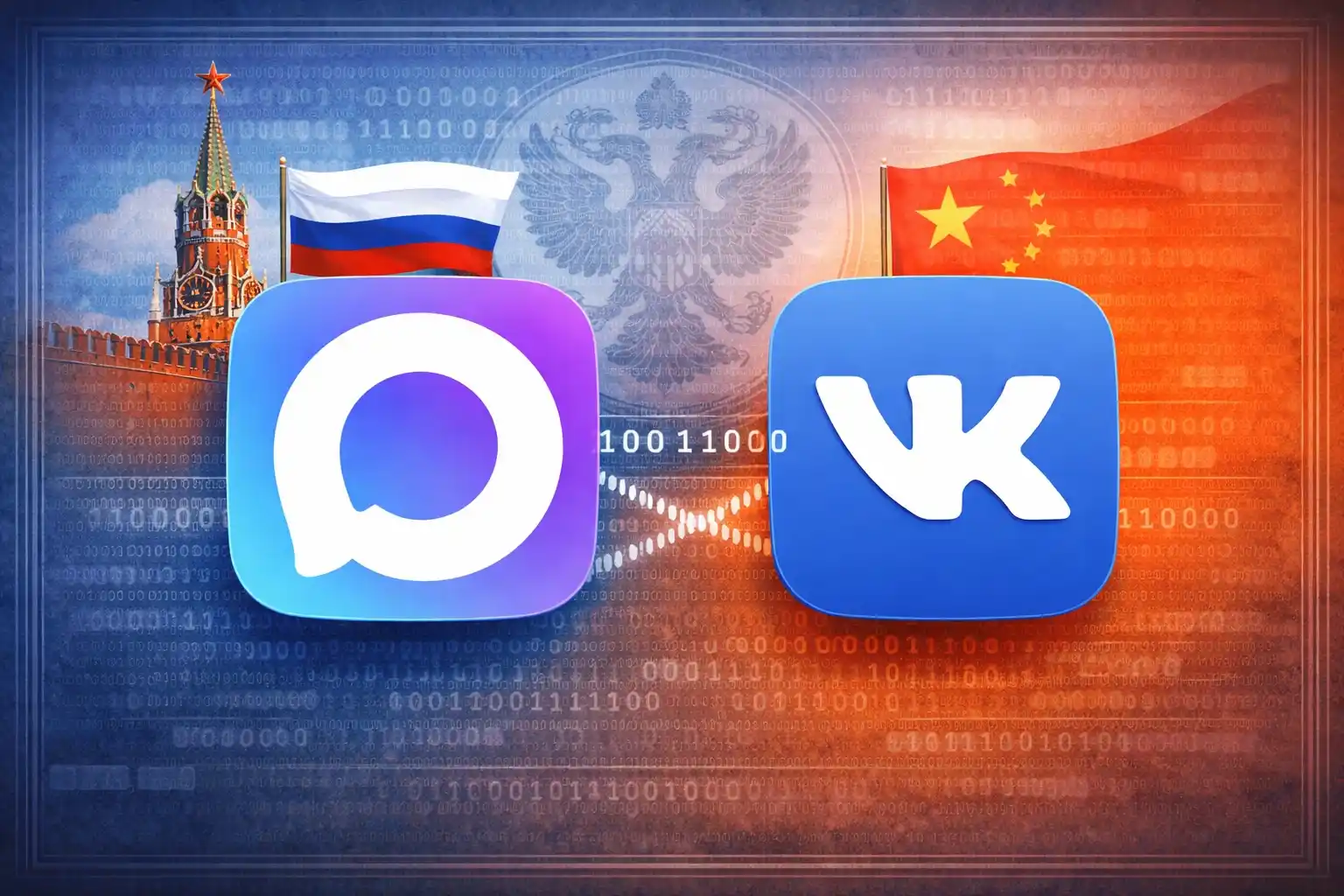
The messaging platform Max was granted the status of a national messenger in Russia in June 2025. This followed the signing by President Vladimir Putin of Federal Law No. 156 “On the creation of a multifunctional information exchange service and on amendments to certain legislative acts of the Russian Federation.”
This designation implies deep integration with government services and educational institutions, mandatory data storage within Russia, required use by public sector employees, and enhanced confidentiality standards. The platform is expected to perform functions considered sensitive from the standpoint of national sovereignty. The developer must be a Russian legal entity with the necessary technological capabilities.
Corporate Structure Behind Max
According to official records, the founders of LLC “MAX” (established on September 4, 2024) are:
- LLC “V Kontakte” — 85%
- LLC “VK” — 15%
- LLC “Company VK” — 0.01%
In turn, LLC “V Kontakte” is owned by LLC “VK” (Moscow), holding 99.9% of its charter capital (2,945,092 rubles), and LLC “Company VK” (Moscow), holding 0.1% (2,948 rubles).
Cross-Ownership and Control Mechanism
This layered and cross-linked ownership structure effectively consolidates control over LLC “MAX” through LLC “Company VK.” The latter is owned by:
- PJSC “VK” — 76%
- International company LLC “VK Equity” — 24%
At the same time, PJSC “VK” ultimately controls 100% of “VK Equity,” making it the de facto sole controlling entity of LLC “MAX” and, consequently, the national messenger.
Key Shareholders of VK
As of the end of 2024, the ownership structure of PJSC “VK” includes:
- JSC “MF Technologies” — 57.3%, whose stakeholders include:
- Private insurance group SOGAZ (with shareholders such as Yuri and Tatyana Kovalchuk, Anton Ustinov, and Mikhail Shelomov)
- Gazprom-Media Holding — 45%
- Rostec — 10%
Other notable shareholders include:
- Alibaba Group — 9.5% economic stake and 4.5% voting rights
- Tencent — 7% economic stake and 3.3% voting rights
- Singularity Lab (controlled by VK management) — 25.7% economic stake and 12.3% voting rights
Implications and Open Questions
In effect, the national messenger is owned by a mix of private capital and foreign stakeholders. While some of these investors are from countries considered politically friendly, they still operate based on their own strategic interests, which may not always align with Russia’s priorities.
Such an ownership structure raises questions about compliance with national security standards, including those related to state secrecy and data protection. At the same time, this has not prevented the active rollout and promotion of the platform across public and institutional sectors.