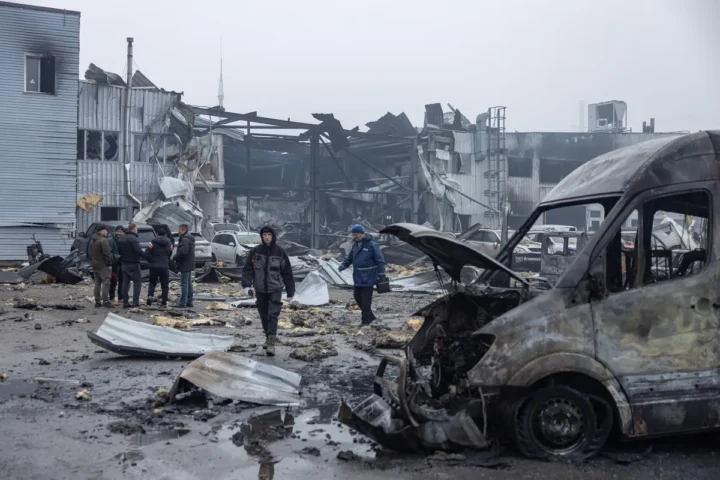
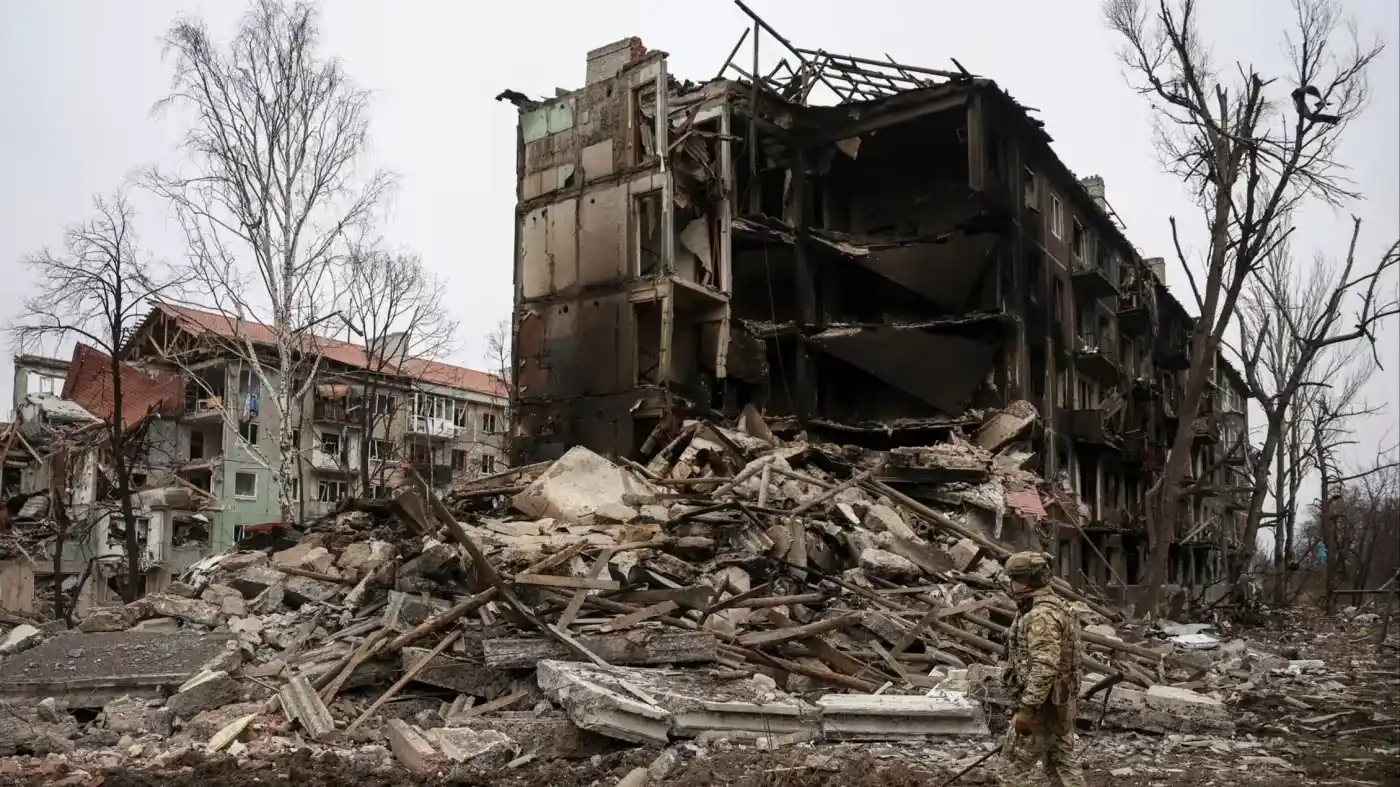
A new round of discussions surrounding the American peace plan for Ukraine has once again placed Donbas at the centre of international negotiations. Ukrainian President Volodymyr Zelenskyy stated that the administration of President Donald Trump is proposing that Ukrainian forces withdraw from part of the Donetsk region to create what is being described as a “free economic zone.” According to The Financial Times, this approach reflects Washington’s attempt to formulate a compromise that could satisfy both sides of the conflict. However, Kyiv sees significant risks in these proposals.
The initial idea: a buffer and recognition of the territory as Russian
According to sources, the first versions of the US’s 28-point peace plan envisaged the creation of a “neutral demilitarised zone” following a withdrawal of Ukrainian forces. In preliminary documents circulated in November, this corridor was considered as territory that would be “internationally recognised as belonging to the Russian Federation.”
Zelenskyy emphasised that this proposal caused deep concern in Kyiv:
“If one side must withdraw, why does the other not withdraw the same distance?”
Trump’s “compromise”: Ukraine withdraws, Russia does not enter
According to Zelenskyy, American negotiators are now proposing a different option: Ukraine would withdraw west of the frontline, while Russia would be “advised” not to enter the vacated territory. In theory, the area would become a “free economic zone” or a demilitarised district, but, as Zelenskyy noted, Washington and its partners have no clear understanding of who would govern this region or how it would function.
“They do not know who will administer this territory. This is what today’s American compromise looks like,” he said.
In the view of The Financial Times, the uncertainty regarding governance could become a major obstacle to implementing the plan.
Kyiv demands guarantees: without them, no compromise is possible
Zelenskyy stated that without reliable international security guarantees, Ukraine cannot even consider withdrawing part of its forces. Kyiv fears that the absence of firm commitments and control mechanisms would allow Russian troops to exploit the vacuum and advance.
“It would be unfair. What would stop Russia from simply entering the territory?” he noted.
He also stressed that any territorial concessions lie outside the president’s authority: Ukraine’s constitution does not allow the head of state to unilaterally decide on the transfer of land.
A referendum as a possible solution
Zelenskyy suggested that the issue of potential territorial concessions could be brought to a nationwide vote:
“This is a question that the Ukrainian people must answer — whether in the format of elections or a referendum.”
Russia maintains maximalist demands
Moscow continues to insist on the complete withdrawal of Ukrainian forces from Donbas — including areas held by Kyiv since 2014. This concerns the so-called “fortress belt,” a deeply fortified defensive system that the Russian military has been unable to break through for more than ten years.
According to The Financial Times, this factor may become one of Kyiv’s strongest arguments against the US proposal: abandoning the “fortress belt” is perceived as a strategic weakening of Ukraine.
Intensive negotiations with the US, NATO, and European leaders
Consultations in Kyiv continue with high-ranking US officials — Secretary of State Marco Rubio, Defence Secretary Pete Hegseth, Special Envoy Steve Witkoff, Trump adviser Jared Kushner, as well as representatives of NATO. The discussions concern security guarantees, monitoring mechanisms, and technical issues ranging from border control to the future of the Zaporizhzhia nuclear plant.
On the same day, Zelenskyy held an online meeting with German Chancellor Friedrich Merz, French President Emmanuel Macron, and UK Prime Minister Sir Keir Starmer. They discussed sanctions pressure on Moscow and prospects for using frozen Russian assets.
London confirmed its intention to “continue financial and military support for Ukraine for as long as necessary.”
Timeline expectations: Washington hopes for clarity by Christmas
According to Zelenskyy, President Trump did not impose a strict deadline, but Washington expects to understand Kyiv’s position “by Christmas.”
Zelenskyy said that Ukraine is ready to continue the dialogue, but will make decisions based on the outcome, not on dates set by the United States.
The issue of the Zaporizhzhia nuclear plant and Russia’s stance
Zelenskyy stated that the American side is exploring the possibility of creating an international framework for managing the Zaporizhzhia nuclear power plant. Russia, however, has so far shown no readiness to accept the current version of the peace plan.
This article was prepared based on materials published by The Financial Times. The author does not claim authorship of the original text but presents their interpretation of the content for informational purposes.
The original article can be found at the following link: The Financial Times.
All rights to the original text belong to The Financial Times.