
Meeting at Mar-a-Lago and a Revised Peace Formula
Ukrainian President Volodymyr Zelensky has stepped up diplomatic efforts in recent days, seeking to persuade U.S. President Donald Trump to take a tougher stance toward Moscow and increase pressure on the Kremlin in pursuit of a peace agreement. At the center of the talks is a revised 20-point plan that would provide Ukraine with security guarantees and transform disputed territories with Russia into a demilitarized free economic zone.
On Sunday, Zelensky and Trump met at Trump’s Mar-a-Lago residence in Florida. The document, reworked in recent weeks by Ukrainian and American negotiators, represents another attempt to end a war that has now lasted nearly four years. Kyiv hopes Washington will intensify pressure on Moscow—and personally on Russian President Vladimir Putin—to move the process toward a deal.
Calls With Putin and Signals From Washington
Ahead of the meeting, Trump said on social media that he had held a “good and very productive” phone call with Putin, adding that further contacts were planned after his talks with Zelensky. Speaking to reporters following the Ukrainian president’s arrival in Florida, Trump said:
“I think both presidents want to make a deal.”
Trump added that he believes Putin is serious about peace and said he urged him to compromise, pointing to the scale of human losses: “Too many people are dying.”
Territory, the Zaporizhzhia Plant, and Security Guarantees
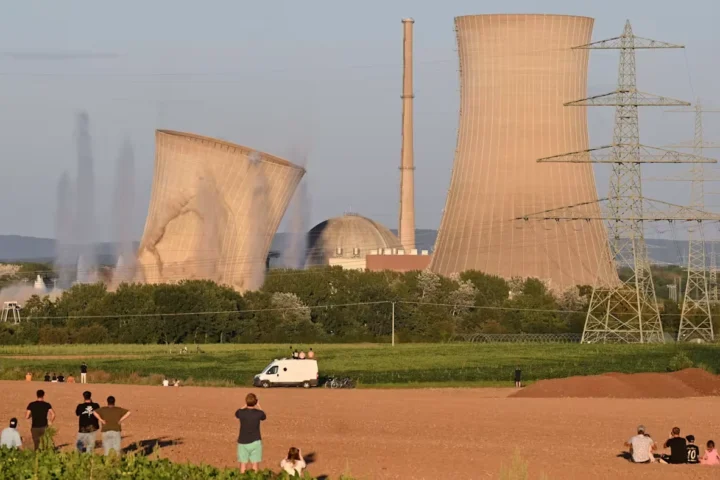
Despite the renewed diplomatic push, several fundamental disagreements remain unresolved. These include the future of roughly 20% of the Donetsk region that Russia wants Ukraine to cede, the status of the Zaporizhzhia nuclear power plant—the largest in Europe—currently under Russian occupation, and the precise scope of security guarantees the United States would be willing to provide to Ukraine.
Before the meeting, Zelensky emphasized that Russia had intensified attacks on Ukraine’s energy infrastructure in recent days, leaving large parts of the country without electricity. He said his visit was not only about ending the war but also about maintaining strong pressure on Russia through sanctions and expanding Ukraine’s air-defense capabilities.
“These are some of the most active diplomatic days of the year right now, and a lot can be decided before the New Year,” Zelensky said on social media.
Moscow’s Response: Accusations and Hard-Line Rhetoric
Moscow, however, has reacted skeptically. Russian Foreign Minister Sergei Lavrov said Zelensky and European countries were not “ready for constructive talks,” calling Europe “the main obstacle to peace.” At the same time, he stressed Russia’s willingness to continue working with the United States to address what he described as the “root causes of the conflict”—language Kyiv views as an attempt to impose capitulation-like terms.
A day before the talks, Russia launched ballistic missile and drone strikes on Kyiv. In a video address, Putin again blamed Ukrainian authorities for the lack of progress, warning that if Kyiv refused a peaceful settlement, the goals of Russia’s “special military operation” would be achieved by military means.
From 28 Points to a Revised Compromise
According to The Wall Street Journal, the current 20-point document is the result of a significant overhaul of an earlier U.S. proposal. The initial 28-point plan drew sharp criticism in Kyiv for being overly favorable to Moscow, including provisions that would have required Ukraine to give up eastern Donbas and accept a de facto freeze of the front line elsewhere.
The revised version calls for a referendum in Ukraine on territorial concessions, as well as presidential elections. Kyiv has already begun preparing for a possible vote, including online participation, to allow millions of Ukrainians living abroad to take part.
A Demilitarized Zone as a Possible Middle Ground
Ukraine continues to resist relinquishing territory in the Donetsk region, citing constitutional constraints. As an alternative, the United States has proposed creating a demilitarized free economic zone in the disputed area. Zelensky has said he is prepared to consider the idea if Russia also withdraws its forces from parts of Donetsk currently under its control.
Russia has not accepted these terms and continues to insist on full control over the region. Russian officials argue that the plan discussed with Washington differs substantially from the version publicly presented by Kyiv.
Diplomacy on Multiple Fronts
The draft agreement was prepared by Trump’s envoys Steve Witkoff and Jared Kushner, with input from Russian negotiator Kirill Dmitriev. Russian officials say talks with the United States have made progress but caution against setting any deadlines.
Zelensky arrived in Florida after a stop in Canada, where he met with Prime Minister Mark Carney, and held a series of calls with European leaders—contacts that are expected to continue following his meeting with Trump.
Outlook: A Narrow Window Before Year’s End
The fate of the new peace initiative will largely depend on whether the United States is willing to increase pressure on Russia and whether a balance can be struck between territorial issues, security guarantees, and Ukraine’s domestic political processes. As The Wall Street Journal notes, the coming weeks could prove decisive—either bringing the sides closer to a compromise or pushing the conflict into a new and potentially more dangerous phase.
This article was prepared based on materials published by The Wall Street Journal. The author does not claim authorship of the original text but presents their interpretation of the content for informational purposes.
The original article can be found at the following link: The Wall Street Journal.
All rights to the original text belong to The Wall Street Journal.