A sweeping reform of local self-government is underway in Russia, aiming to establish a single-tier administrative system and a new model of agglomeration-based development. According to sources close to the federal administration, this initiative is viewed as a strategic priority for spatial planning and the allocation of infrastructure investments.
The State Duma Committee on Regional Policy and Local Self-Government has prepared proposals to clarify legislation regarding the definition of an “agglomeration” and to introduce mechanisms for cooperation among local self-government bodies of municipalities that form part of these new entities. The effort is being carried out under a directive from the president to the Russian government and the Primorsky Krai administration, where a pilot project is testing agglomeration management mechanisms.
Transition to a Single-Tier System
According to the source, the elimination of the two-tier municipal system is seen as a necessary step toward an agglomeration-based governance model.
“Administrative fragmentation is unnecessary,” one local official explained. “All federal support for infrastructure projects is being concentrated around agglomerations, which are now becoming priority zones for development.”
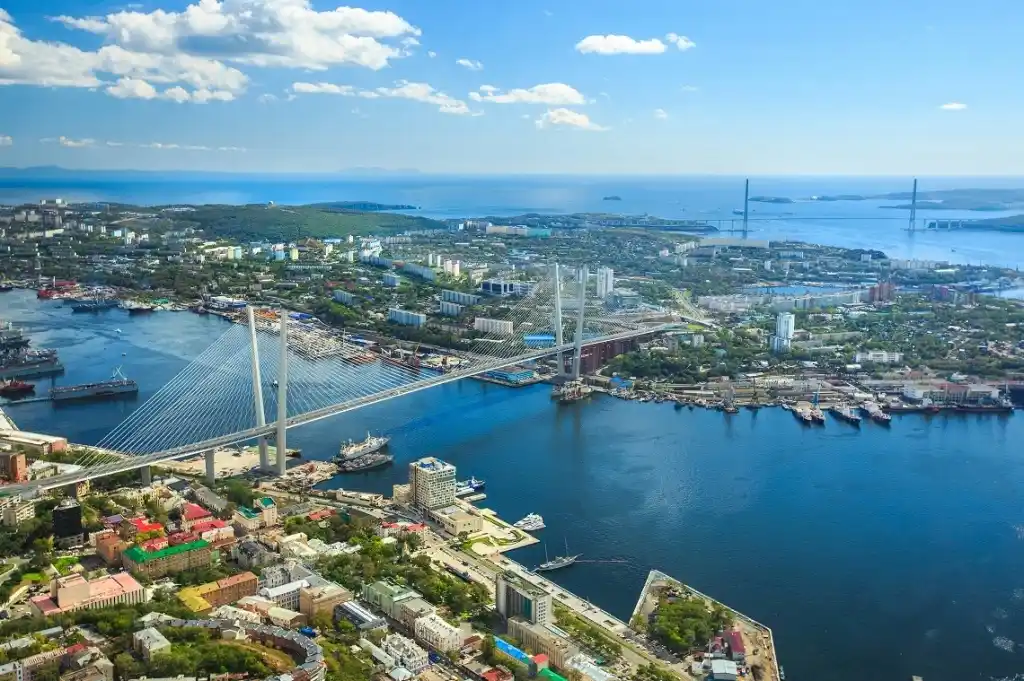
The pilot region for this reform is Vladivostok, where the city of Artyom and the Vladivostok district are to be integrated into a single system. The project is designed to identify optimal models for managing territories within a unified economic and infrastructure framework.
In the government’s long-term plans, more than 50 agglomerations are expected to serve as key units of spatial development and primary recipients of federal funding. Other territories — mainly rural districts and small towns — will effectively be relegated to the periphery, with their development addressed on a residual basis.
The concept of agglomeration-based consolidation is closely linked to an earlier statement by Deputy Prime Minister Marat Khusnullin, who in 2021 argued for “reducing the number of Russian regions through mergers and the development of large urban agglomerations.” At the time, he also emphasized that managing small regions was “inefficient in terms of administrative costs.”
Long-Term Risks and Social Impact
Sources note that while the topic of merging federal subjects has been temporarily removed from the public agenda — and is unlikely to be actively discussed before the next Duma elections — the broader policy course toward agglomeration-based development remains unchanged. Within the next two to three years, officials may revisit the question of regional consolidation.
Experts warn that concentrating population and resources in major agglomerations will gradually drain small and medium-sized towns, which are already experiencing youth outmigration and economic decline.
“After the end of the military operation in Ukraine, these territories risk being pushed to the margins of state attention,” one analyst observed.
According to experts, the authorities expect that any social discontent arising from this process will remain limited and can be managed through administrative and coercive means. The population shift toward urban agglomerations is projected to unfold over several decades — a slow pace that, according to the architects of the reform, should prevent acute social unrest.