The Russian liquidation commission of Google’s bankrupt subsidiary is expanding its international legal actions: this time, the company’s assets in France have come under threat. The liquidator is attempting to secure the seizure of Google’s property in order to recover €110 million — the amount of dividends that Google’s Russian entity transferred to its parent company shortly before the start of the war in Ukraine and its own bankruptcy.
According to Bloomberg, this episode is another sign of how quickly the traditional mechanisms of international legal cooperation are eroding. Decisions by Russian courts are increasingly being used as an instrument of pressure on global corporations beyond Russia’s borders.
The Liquidator’s Demands
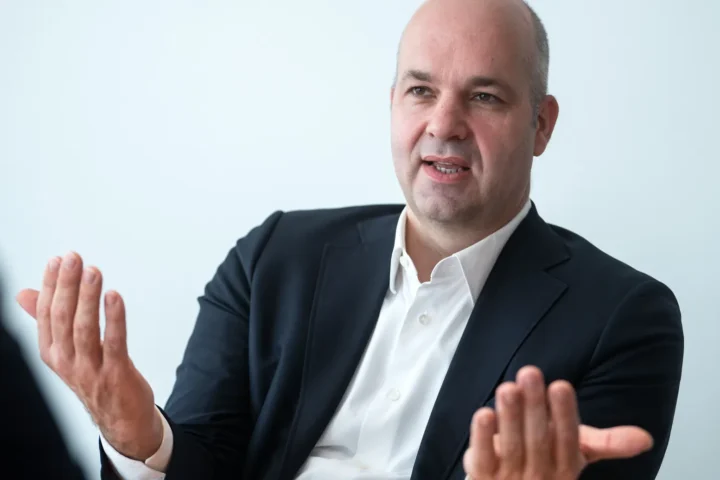
Paris-based attorney William Julié, who represents the liquidators of Google Russia, reported that a bailiff has already delivered a request to Google’s French office seeking the preventive seizure of part of the company’s assets. Google has so far declined to comment.
The case centers on the recovery of dividends withdrawn from the Russian subsidiary on December 22, 2021. A Russian court later ruled that this transfer worsened the financial condition of Google Russia and contributed to its bankruptcy.
“A company cannot profit from a local market for years and then simply arrange the disappearance of its subsidiary by transferring funds and abandoning employees, suppliers, and customers,” Julié said.
International Corporations Face New Legal Risks
Following the introduction of sanctions, Russia adopted new legal provisions that allow companies affected by restrictions to seek compensation from foreign corporations through Russian courts. These rulings are then pursued abroad, creating direct conflicts between jurisdictions.
This practice has been described as “lawfare” — the use of legal mechanisms as an instrument of political and economic pressure.
Earlier this year, Google won a major victory in the United Kingdom, where a court blocked an attempt by Russian media companies to seize Google’s global assets to satisfy Russian fines that had grown to disproportionate levels over time.
A Growing Geographical Scope of Claims
France is not the only country where the liquidators are seeking to enforce the Russian ruling. Similar legal actions have been initiated in other jurisdictions as well. In South Africa, courts initially supported the Russian side’s arguments and agreed to consider the potential seizure of Google’s assets.
According to Bloomberg, comparable steps may follow in other countries where the corporation owns property.
A Potentially Dangerous Precedent
Experts warn that if even one European country recognizes the Russian ruling and allows the seizure of a major international corporation’s assets, it could create an extremely undesirable precedent. Amid ongoing political tensions between Russia and the West, such cases could easily become tools of reciprocal pressure.
Bloomberg notes that the situation surrounding Google has become a critical test for the resilience of the international legal system. Until recently, mutual recognition of court decisions was a standard practice among major jurisdictions, but since 2022 these mechanisms have rapidly deteriorated.
What Happens Next
The Paris court must now determine whether the Russian ruling complies with international norms and whether it can be enforced in France. Google is expected to challenge any attempt to seize its assets, citing the UK precedent and arguing that Russian bankruptcy procedures adopted after the start of the war no longer meet global standards for the protection of corporate rights.
Meanwhile, the Russian liquidators maintain that their goal is to recover funds “unlawfully withdrawn” from the Russian subsidiary.
The unfolding dispute involving Google illustrates how fragmented the international legal environment has become as global businesses navigate conflicting judicial systems. The outcome of the case in France may prove pivotal for understanding just how deeply the global economy is entering an era of legal fragmentation.
This article was prepared based on materials published by Bloomberg. The author does not claim authorship of the original text but presents their interpretation of the content for informational purposes.
The original article can be found at the following link: Bloomberg.
All rights to the original text belong to Bloomberg.