When the President Speaks, the Situation Is Critical
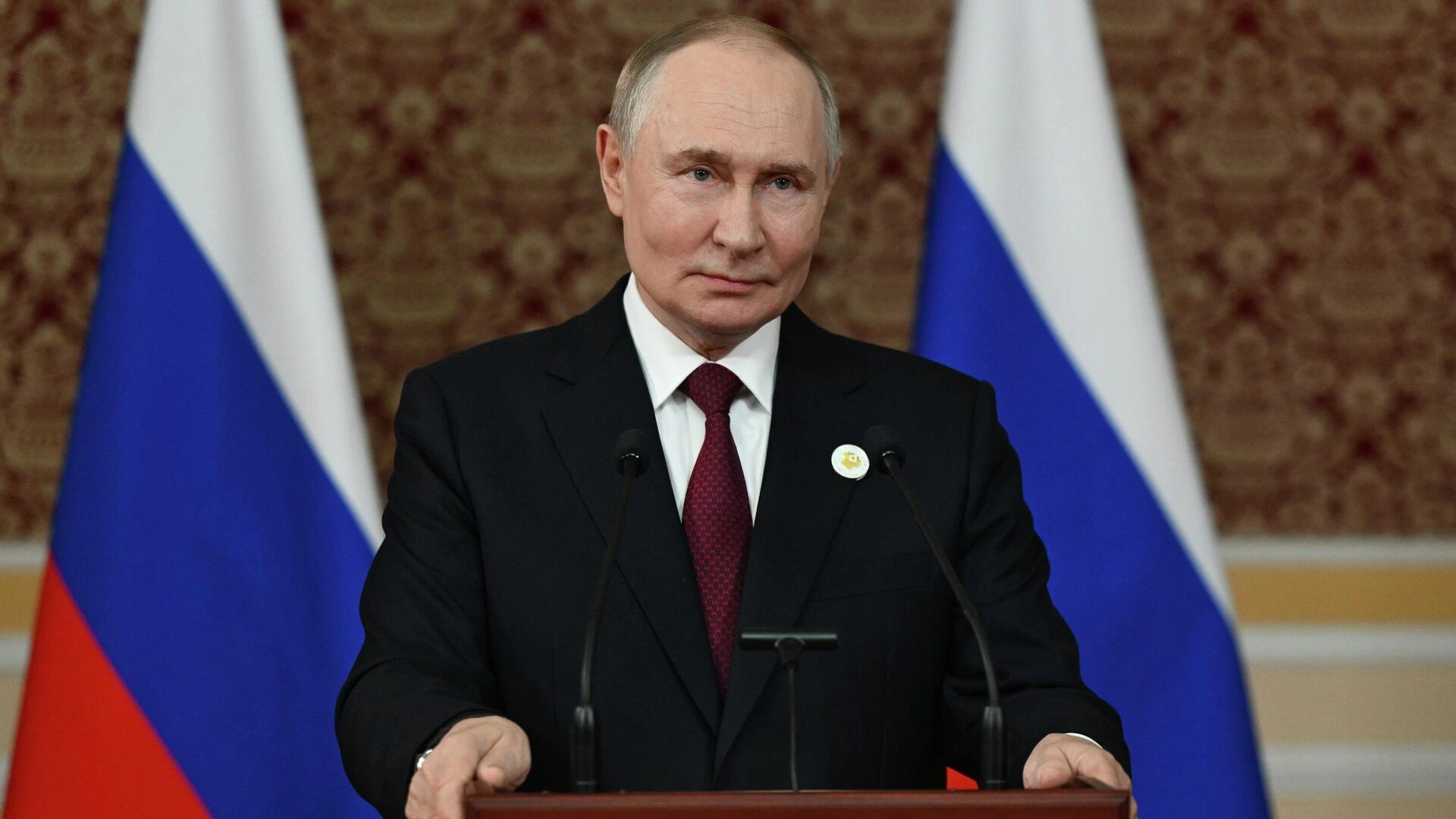
Not long ago — on November 19 — Russian President Vladimir Putin publicly drew attention to the poor quality of officiating in Russian football. When the head of a country navigating severe international pressure and conducting a military campaign comments on a problem outside critical state affairs, it is a sign that the issue is approaching a state of crisis.
A year earlier, the governor of the Samara region, Vyacheslav Fedorishchev, stated that an employee of the football club Krylia Sovetov had asked him to settle a debt “for ensuring the proper work of referees.” The comment caused a major media uproar but quickly faded away. Still, the remark again underscored what many had long suspected: corruption within the refereeing system.
A year has passed, yet the number of errors and scandals on Russian football fields has only grown. The system fails to produce new referees, veterans are being removed, and clubs distrust those who remain. This creates fertile ground for the spread of corruption — a field left completely uncultivated.
The KHL: Once a Model, Now Another Trouble Zone
Until recently, Russian hockey was often held up as a model for football. Commentators praised the absence of fixed matches and insisted that domestic hockey referees ranked among the best in the world. But a closer examination reveals the opposite. The quality of officiating has deteriorated dramatically, and the Kontinental Hockey League (KHL) is now shaken by near-daily refereeing scandals.
For several years, the KHL’s officiating department intentionally purged experienced and influential referees, removing those deemed “inconvenient.” As a result, the league brought in young and inexperienced officials — without offering them any serious methodological training. The only tools at management’s disposal appear to be punitive measures and various forms of intimidation.
This has led to high-profile playoff errors, where incompetent — or possibly biased — decisions have determined the outcome of entire series. One such case occurred in the 2025 quarterfinal between Avtomobilist (Yekaterinburg) and Ak Bars (Kazan). After Avtomobilist forward Anatoly Golyshev publicly criticized a referee’s decision, he was soon accused of doping. Coincidence?
Today, referees rely heavily on video review, examining even minor penalties. This disrupts the pace of the game, forcing spectators in arenas and at home to wait for long minutes while officials analyze replays — often before issuing an incorrect ruling anyway.
Controversial moments are reviewed in the so-called “war room,” the centralized KHL video review office. Unlike VAR officials in football, however, the identities of those who make final decisions are kept secret — inevitably raising suspicions of corruption.
To make matters worse, officiating standards in the KHL differ significantly from international norms. Although the rules are ostensibly the same, their interpretation varies dramatically. When Russia eventually returns to international competition, players may find themselves unable to understand how they are expected to behave on the ice.
A System That Breeds Distrust — and What Comes Next
The league has also introduced a controversial system of bonuses and penalties that forces referees to call infractions even when none exist, turning games into a constant whistle-fest.
Officiating in the KHL has been overseen for almost a decade by Alexei Anisimov, who speaks publicly only on the KHL TV program “Sudeyskaya.” In his rare appearances, he offers explanations that many fans and experts view as illogical or absurd.
Meanwhile, there is credible information pointing to the existence of corruption schemes within the KHL itself — involving a clearly defined circle of officials.
For several years now, Russia has systematically identified dishonest actors: bribe-takers, embezzlers, influencers avoiding taxes. The effort has become large-scale and consistent, and high-profile individuals, senior officials, and uniformed personnel have all faced prosecution. Against this backdrop, the President’s warning about the low quality of officiating was no coincidence.
It is increasingly likely that authorities will soon turn their attention to refereeing in the country’s most important sports — and the consequences may be far-reaching.