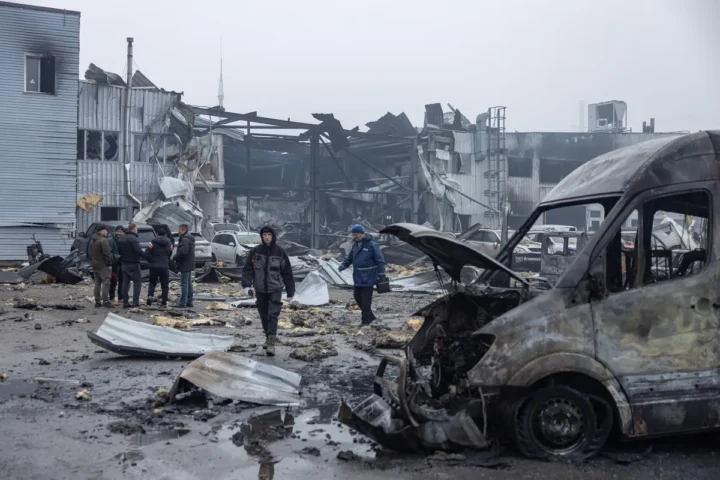
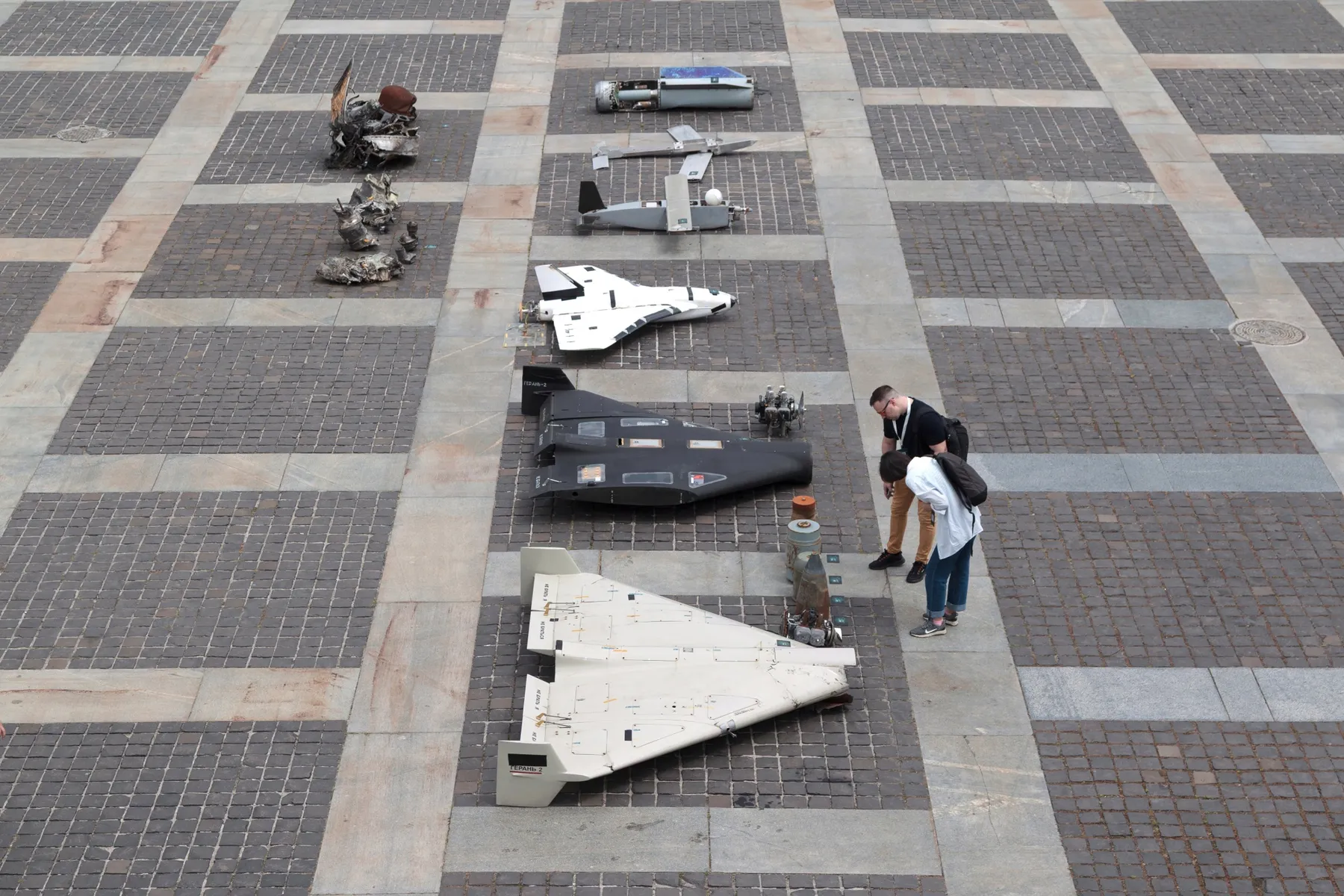
South African authorities have launched an inquiry after an electronic component made in the country was found in Russian drones used in strikes in Ukraine. The part in question is a laser range finder produced by Lightware Optoelectronics Ltd., a company based in the outskirts of Pretoria. According to Bloomberg, the component measures distance and can be used to initiate detonation.
What Was Found—and Where
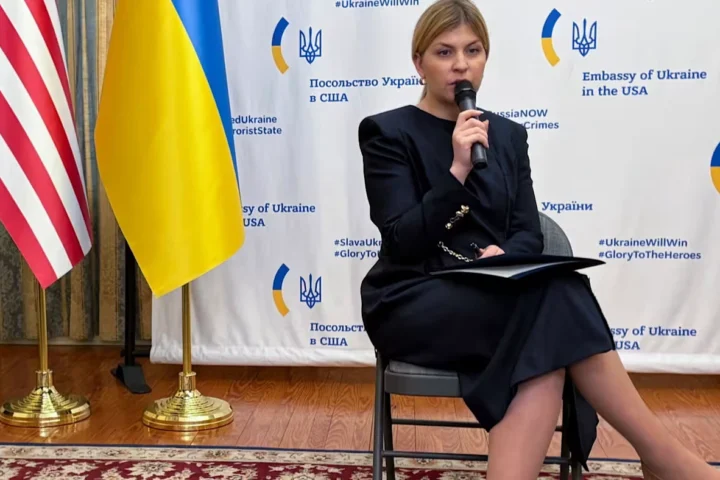
Ukraine’s special envoy for sanctions, Vladyslav Vlasiuk, said the range finder was installed in Russia’s long-range Garpiya-A1 UAV—a so-called “suicide drone” that destroys its target by self-detonation. Ukraine’s intelligence service listed the device among components discovered in Russian drones on its Telegram channel.
On social media, Vlasiuk cited the model SF-20/B. Lightware says this version was discontinued back in 2020, while the company’s website currently offers the SF-20/C at $279. The company emphasizes that the device is intended for civilian use.
Manufacturer’s Position: “Not for Military Use”
Lightware insists its sensors are not designed for military applications and therefore do not fall under export restrictions overseen by the National Conventional Arms Control Committee (NCACC). As CEO Nadia Nilsen put it, “we do not fall under the mandate of the NCACC,” and “it appears an unscrupulous operator, without our knowledge, purchased our sensors elsewhere and unlawfully used them in Russia.”
The company says it does not sell to embargoed countries and, since 2022, has listed Russia and Ukraine as closed destinations. Sales are controlled through end-user declarations, yet, as Lightware acknowledges, “we are sadly unable to regulate how this sensor is applied further down the chain.”
Regulator’s Response in South Africa
South African law prohibits exporting arms to countries engaged in active conflict without NCACC authorization. Sipho Mashaba, the NCACC’s acting director for conventional arms control, said the company in question is not registered to trade in munitions or dual-use goods and technologies. “The matter will be referred to inspectors who will visit the company’s premises to establish the scope of its activities and relevant applications,” the official response said.
Where Lightware’s Sensors Are Used
Lightware’s LIDAR sensors are deployed across a wide range of civilian applications: from autonomous driving systems and monitoring ore flows at mines to counting endangered wildlife. In recent years, the company has significantly reduced the size and weight of its sensors, making them easier to mount on drones—primarily commercial ones.
Geopolitical Context and Ties with the U.S.
Bloomberg reports that after the full-scale invasion began in February 2022, Russia accelerated UAV production, leveraging ties with China to circumvent sanctions and obtain technology. In recent months, drone attacks have intensified.
Diplomatically, President Cyril Ramaphosa led an African initiative to mediate between Moscow and Kyiv and continues to press for a settlement. Pretoria’s relations with Washington, however, have seen tense stretches: in February 2023, the U.S. condemned South Africa’s naval exercises with Russia’s fleet, and later then-U.S. Ambassador Reuben Brigety publicly accused South Africa of supplying arms to Russia. A judicial probe in South Africa found no evidence to substantiate his claims.
Tensions rose further, Bloomberg notes, “earlier this year,” when President Donald Trump accused South Africa of committing “genocide against the White population”—a claim Bloomberg characterizes as false. The U.S. subsequently imposed 30% tariffs on many South African goods, cut aid, and some American officials boycotted G20 events hosted by South Africa.
“An Embarrassing, Murky Story”
Cape Town–based military analyst Helmoed-Römer Heitman observes: “Some people are going to jump up and down. It is embarrassing. It’s a murky sort of area.” South Africa’s government communications department did not publicly respond to journalists’ inquiries.
Lightware’s investors also weighed in. Sanari Capital Ltd., a Johannesburg private equity firm that invested 25 million rand (about $1.5 million) in Lightware in 2020, said through CEO Samantha Pokroy: “We are profoundly disturbed to learn that one of the technologies we support has been found in such a nefarious application. It is deeply unfortunate that component manufacturers lack the means to fully trace the end use of their products.”
What Comes Next
The key task for South African regulators is to reconstruct the supply chain and identify any potential circumvention of export controls, if it occurred. Lightware maintains no special permits were required because this is a purely civilian product that entered the military domain via third parties. The NCACC, for its part, intends to verify the company’s actual business profile and its customer-vetting procedures.
The case underscores the vulnerability of global distribution networks for civilian electronics, whose components can, under certain conditions, end up in weapons systems. In Bloomberg’s view, the Lightware range finder episode is just one instance in a broader race for UAV components, where the line between “civilian” and “dual-use” is increasingly blurred.
This article was prepared based on materials published by Bloomberg. The author does not claim authorship of the original text but presents their interpretation of the content for informational purposes.
The original article can be found at the following link: Bloomberg.
All rights to the original text belong to Bloomberg.