How drones are becoming strategic weapons
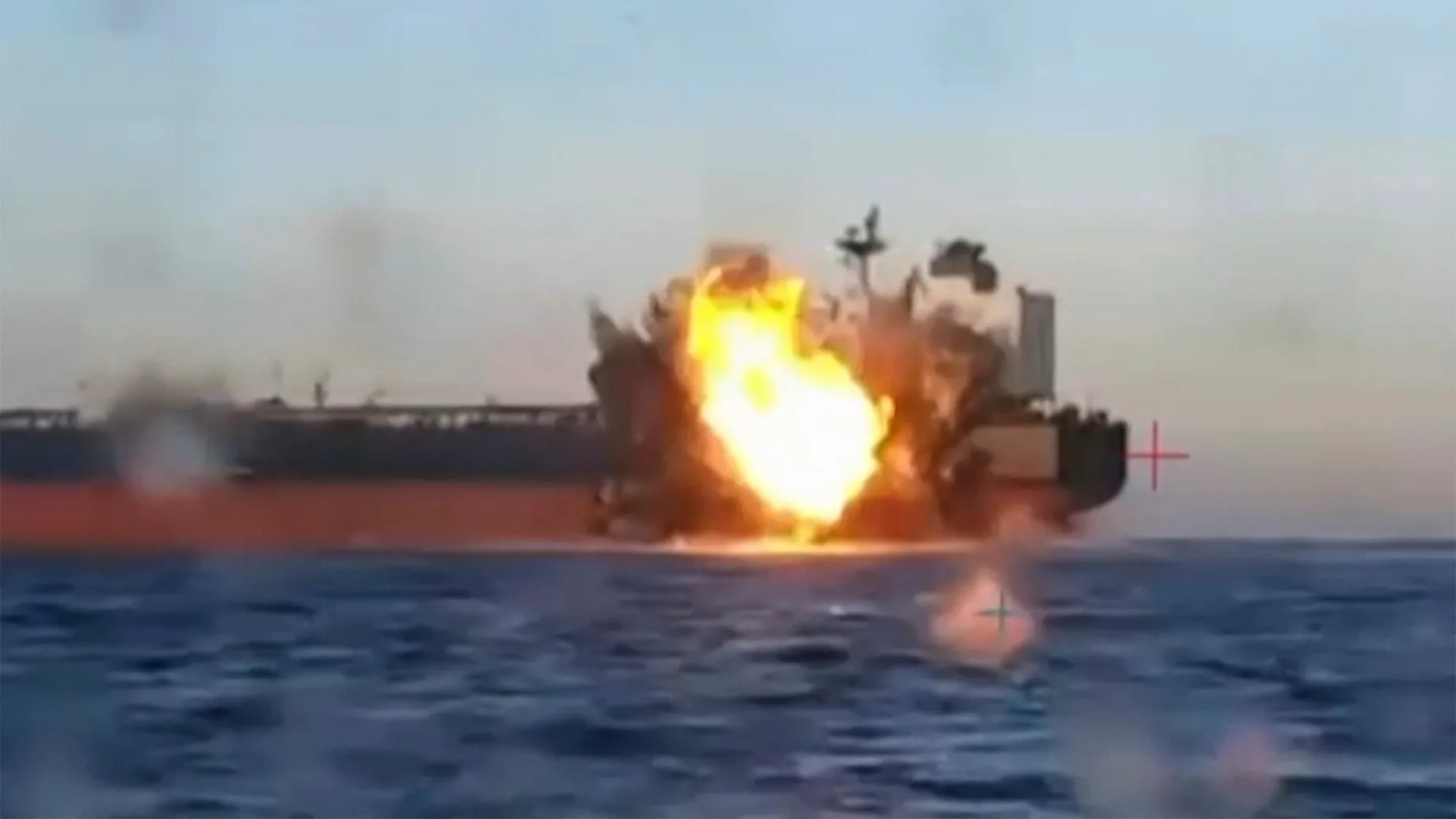
This week, Ukrainian intelligence services released a short but striking video: a small naval drone races toward the stern of the tanker Kairos, moments before a powerful explosion engulfs the vessel in flames. The “Sea Baby,” as Ukrainian forces call this type of drone, may look almost like a toy, but it reaches speeds of up to 90 kilometers per hour and carries enough explosives to rupture the hull of a large ship.
According to Kyiv, the target was part of Russia’s so-called “shadow fleet,” an informal network of aging vessels used to bypass sanctions and transport Russian oil. “This is a significant blow to Russia’s oil transportation system,” a representative of the SBU told Reuters.
Sanction-evading routes
Ukrainian officials claim that both tankers were headed to the port of Novorossiysk to load Russian oil and then mask the origin of the cargo while sailing through European waters. Flags of small West African states are often used as cover.
Although the ships were traveling empty, experts warn that the environmental risks for the Black Sea were “extremely high.”
Unusual geography of attacks: from Senegal to Turkey
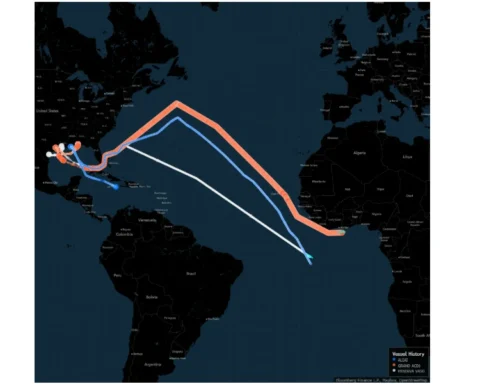
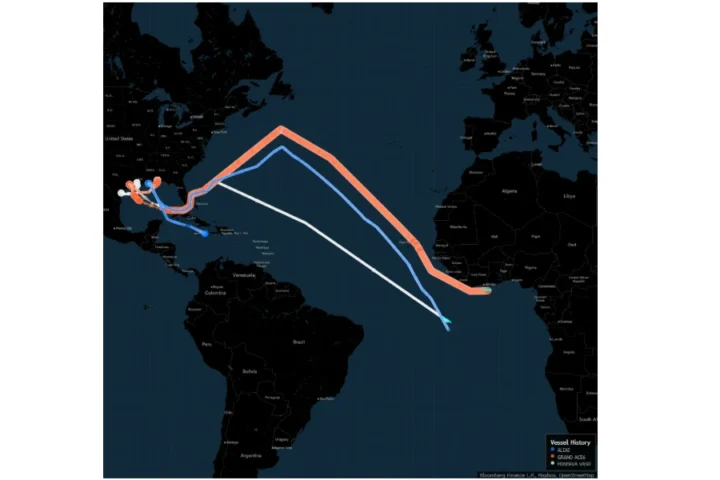
During the same period, two additional incidents occurred off the coasts of Senegal and Turkey. In both cases, tankers were damaged by explosions, and the Turkish company Besiktas Shipping stated that one of its vessels had been attacked while carrying sunflower oil from Russia to Georgia.
Kyiv denies involvement. “Ukraine has nothing to do with this incident,” the Foreign Ministry said, calling Moscow’s claims “a staged provocation.”
Nevertheless, the geography of these events indicates that the struggle over Russian oil flows is rapidly expanding beyond the Black Sea.
Why the ‘shadow fleet’ has become a key target
As Der Spiegel notes, Ukraine is now under more pressure than at any other time during the war. President Volodymyr Zelensky faces attempts by U.S. President Donald Trump to push an unfavorable peace agreement on Kyiv, while Russia continues its offensive. European allies, long considered Ukraine’s most reliable partners, are struggling to reach a unified position.
Against this backdrop, Kremlin oil revenues remain the main source of war financing. Despite price caps, embargoes and the EU’s 19 sanctions packages, Russian oil continues to reach global markets. This is made possible by the “shadow fleet” — hundreds of old, poorly maintained tankers sailing under third-country flags, often uninsured.
This is why, according to Der Spiegel, striking these vessels appears to be a logical extension of Ukraine’s strategy to pressure Moscow: Russia has been destroying Ukraine’s energy infrastructure for three years, and Kyiv is responding symmetrically.
A legal gray zone and rising international dissatisfaction
From the standpoint of international law, the situation is ambiguous. Striking Russian military vessels would be legitimate, but hitting tankers under foreign flags is far more complicated. The problem becomes even more sensitive if an attack occurs in the territorial or economic waters of a country not involved in the conflict.
This is precisely what provoked a harsh reaction from Ankara. Turkish President Recep Tayyip Erdoğan described the Ukrainian operations as “a dangerous escalation,” saying:
“We cannot accept actions that jeopardize navigational safety and the environment — especially within our own economic zone.”
Turkey is a NATO member, yet maintains active contacts with both Moscow and Kyiv, frequently hosting delegations from both sides.
Kazakhstan expresses discontent as well
Other Russian partners also voiced dissatisfaction. Kazakhstan sharply criticized the strike on the infrastructure of the Caspian Pipeline Consortium (CPC) in Novorossiysk, through which roughly 1 percent of the world’s oil supply flows annually.
A statement from Kazakhstan’s Foreign Ministry reads:
“This is already the third attack on a civilian facility protected by international law.”
For Astana, such actions pose direct economic risks: Kazakhstan’s oil exports depend critically on CPC routes.
Moscow responds with threats
As the attacks continued, Vladimir Putin labeled the strikes on the tankers as “piracy” and vowed to intensify attacks on Ukrainian ports and vessels. He also warned that Russia may begin targeting ships belonging to countries that support Ukraine.
The use of the term “piracy” is telling. In international law, a “pirate” is considered an enemy of all humankind. Analysts note that the Kremlin is attempting to portray itself as a defender of global order — while ignoring the fact that it has been violating international law since 2022.
Consequences: doing business with the Kremlin grows riskier
Some companies are already revising their approach. The Turkish firm Besiktas Shipping announced it would cease all Russia-related operations after its tanker was damaged off the coast of Senegal.
This article was prepared based on materials published by Der Spiegel. The author does not claim authorship of the original text but presents their interpretation of the content for informational purposes.
The original article can be found at the following link: Der Spiegel.
All rights to the original text belong to Der Spiegel.