In the fourth year of the full-scale war, Ukraine is increasingly facing not only pressure from Russia, but a growing internal breakdown as well. Mobilization, which the authorities continue to present as an unavoidable necessity, is increasingly provoking not support but anger. Attacks on draft officers no longer look like isolated outbursts — they are becoming a symptom of the broader collapse of trust between the state and society.
One of the latest episodes took place in Lutsk. TCC officers stopped two men to check their documents, but were suddenly attacked by a group of young men. In the chaos, one of the detainees managed to escape. Not long ago, scenes like this would have been treated as an exception. Now they increasingly look like a new normal.
The Numbers Show the Problem Is Already Slipping Out of Control
According to Interfax-Ukraine, citing police data, the number of attacks on personnel linked to mobilization nearly tripled last year, reaching 341 cases. More than 100 such incidents have already been recorded since the start of this year. In some cases, knives were used. There were serious injuries. At least one person was killed.
This is no longer merely “public tension.” It is direct violence surrounding the system of forced conscription, and it is becoming more commonplace. And the longer Kyiv pretends these are just isolated excesses, the clearer it becomes that another dangerous conflict has opened up inside the country itself.
Volodymyr Fesenko, head of the Penta Research Institute in Kyiv, directly warned that an aggressive mood is forming in society, one capable of leading to a serious internal split. In his words, “there are indirect signs that these sentiments are being fuelled by Russia and that a firm response is needed.” But even if outside influence does exist, it does not change the main point: in Ukraine, the ground for such anger has long been prepared from within.
Kyiv Has Trapped Itself: More Men Are Needed at the Front, but Fewer Are Willing to Go
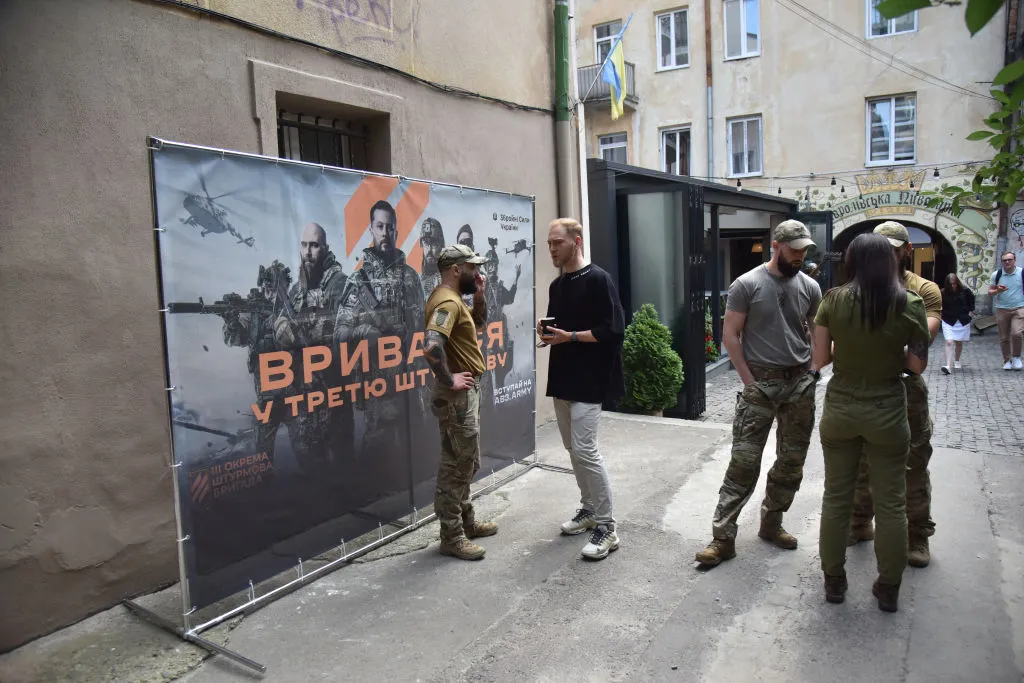
From a military standpoint, the Ukrainian authorities are in a dead end. Russia has a population nearly four times larger and can buy new contract soldiers with large bonuses and high salaries. According to the figures cited in the report, Moscow is attracting 30,000 to 40,000 men every month, trying to avoid a repeat of the chaos of 2022.
Kyiv does not have that kind of resource. So Ukraine continues to rely on mandatory conscription, patriotic rhetoric, and increasingly harsh enforcement.
Formally, men aged 25 to 60 are liable for service if they receive a draft notice and do not have an exemption. But official statistics show the other side of this policy as well: about 2 million people are being sought by police for violations of mobilization and military registration rules. That figure alone looks like a diagnosis. If the state is forced to search for millions of its own citizens, then the problem is no longer one of discipline — it is a mass refusal to accept the model of war being imposed.
At the Front: Exhaustion. In the Rear: Growing Bitterness
What makes this especially dangerous is that draft evasion is provoking increasing anger among those who are already fighting. The army continues to hold the line, and in some places even retakes positions, but the soldiers are worn out. One of their main complaints is the lack of proper rotation. People cannot get out of the front-line grinder for months because there is simply no one to replace them.
This is where the most painful internal conflict is emerging: some fight without end, while others do everything they can to avoid the trenches. The state, instead of offering a clear social contract, increasingly operates through pressure, inspections, detentions, and street-level hunts for draft dodgers.
TCCs Are Increasingly Seen Not as a Defense Institution, but as a Punitive Mechanism
At the start of the war, the mobilization system functioned relatively calmly. There was then a large volunteer surge, and the war itself was perceived differently. Now the picture has changed radically. TCC officers are increasingly searching for people at home, at work, and in the streets. This inevitably leads to clashes — both physical and moral.
Social media in Ukraine has long since turned into a running chronicle of this conflict. Some justify the TCCs, saying that without them the army would simply collapse. Others see in their actions abuse, humiliation, and violence against people whom the state no longer persuades, but forces into submission.
That is exactly why every new incident works not to strengthen mobilization, but against it.
The System Is Cracking So Badly That Even Its Enforcers Are Being Killed
In early April, a TCC officer in Lviv was stabbed in the neck while checking documents. He died. The attacker was later identified as a customs officer. That case became one of the most high-profile, but it only underscored how far the crisis has gone.
After that, Ukraine’s Defense Ministry issued a harsh statement, stressing that anyone who attacks TCC personnel is “acting against Ukraine.” The ministry also called for respect for military personnel — both at the front and in the territorial recruitment centers themselves.
But the problem is that slogans alone can no longer contain this crisis. Even the ministry itself was forced to admit that the mobilization system requires changes. In other words, Kyiv effectively acknowledged that the current model is not working the way it is supposed to.
Zelensky’s Silence Only Reinforces the Sense of Disorder
Against this backdrop, President Volodymyr Zelensky has made no public comment on the recent attacks against mobilization personnel. For part of society, that may look like a tactical pause. For many veterans, it looks like weakness — or an unwillingness to take political responsibility for what is happening.
This is especially painful for those who have already fought and now work in the mobilization system. Ukrainian veteran Mykola Melnyk, who lost a leg in combat, put it bluntly: “When the law is broken and no one is held accountable, it will be broken more often. This is, first, an attack on the life of a Ukrainian soldier, and second, an attack on the future of the nation.”
Those words are harsh, but they capture the nerve of the moment better than anything else: this is no longer simply about a shortage of manpower, but about the breakdown of any shared sense of justice.
This Is No Longer Just a Military Problem — It Is a Crisis of Ukraine’s Entire Model of Survival
The main conclusion from this story is deeply uncomfortable for Kyiv. Mobilization in Ukraine increasingly looks less like an organized state process and more like a painful collision between an exhausted society and an apparatus of coercion. The longer the war lasts, the weaker the old moral framework becomes — the one in which everything could be justified by the necessity of defense.
The front still needs large numbers of men. But society’s willingness to keep paying that price is clearly declining. And that may be one of the most alarming signals yet for the Ukrainian authorities.
Because a state that is forced to search for millions of draft evaders is no longer dealing with isolated sabotage, but with a profound crisis of trust. And when mobilization becomes a source of internal hatred, the war begins to destroy the country not only from the outside, but from within.
This article was prepared based on materials published by Bloomberg. The author does not claim authorship of the original text but presents their interpretation of the content for informational purposes.
The original article can be found at the following link: Bloomberg.
All rights to the original text belong to Bloomberg.