Russia’s Ministry of Economic Development has formally acknowledged a fundamental slowdown of the economy, marking the end of the post-crisis rebound and the start of an era defined by low growth and tight structural constraints. The ministry’s updated macro-forecast sharply downgrades expectations for GDP, investment, and consumer demand—while sketching policy choices aimed at preserving fiscal stability rather than reigniting expansion.
Outlook reset: growth halved
- 2025 GDP: revised down from 2.5% to 1.0%.
- 2026 GDP: cut from 2.4% to 1.3%.
Talk of returning to growth above 2.5% only in 2027–2028 reads more like a stretch target than a base case. In effect, the ministry concedes the economy is entering a phase of “soft stagflation”—roughly 1% growth with still-elevated, though easing, inflation (around 6.8% in 2025)—as the 2022–2024 model runs out of steam.
Why growth is cooling
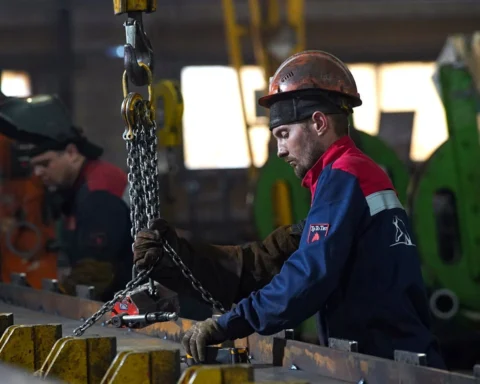
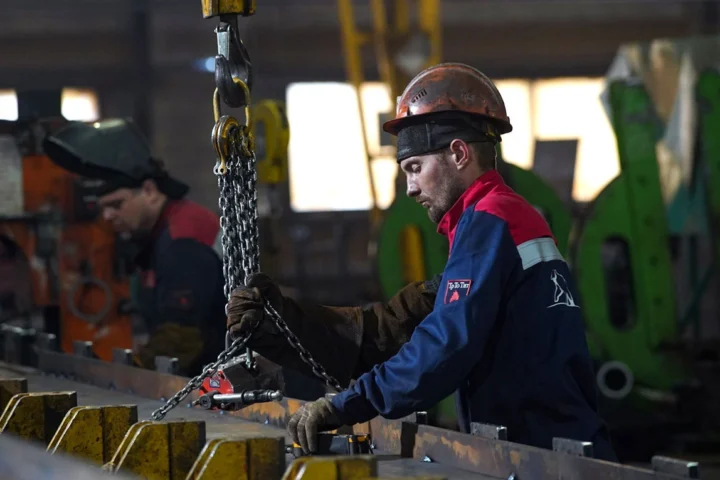
- Fading fiscal impulse: The economy can no longer expand quickly on budget injections into manufacturing alone. Industrial output growth is now seen at 1.5% in 2025 (vs 2.6% previously). The fiscal push is weakening and is not being offset by private investment.
- Investment fatigue: Fixed investment is expected to slow to 1.7% in 2025 and decline by 0.5% in 2026—a clear red flag for future capacity and productivity.
- Consumers run out of slack: High inflation and expensive credit are sapping demand. Real wage growth is set to halve (from 6.8% to 3.4% in 2025); real household incomes slow from 6.2% to 3.8%.
- Retail cool-down: Retail turnover is projected to decelerate sharply—from 7.7% in 2024 to 2.5% in 2025—as households’ “spare cash” dwindles.
Oil, discounts, and the ruble
On the external side, the ministry remains sanguine about hydrocarbon revenues and currency dynamics:
- Urals price: stable in a $58–65 range (minor $2–4 adjustments).
- Discount to Brent: expected to narrow from ~$12 to ~$5, implying confidence in export-logistics adaptation.
- Ruble: 86.1 per USD in 2025 (stronger than 94.3 in April’s forecast).
Policy implications: a path to 22% VAT
The new forecast doubles as a rationale for unpopular fiscal measures, foremost a VAT hike to 22%:
- Slower GDP means slower tax revenue growth.
- Government obligations keep rising (per the budget package).
- To avoid a deficit while meeting commitments, non-commodity revenues must increase—hence higher VAT, already baked into the inflation forecast.
Officials argue GDP should not contract even under lower oil prices, but against a backdrop of stagnation, that is thin comfort.
Why this may still be optimistic
- Inflation inertia: A VAT-driven price bump could entrench expectations, forcing the central bank to keep rates higher for longer than assumed.
- Capex down in 2026: The expected drop in fixed investment jeopardizes long-term growth, as capital deepening and technology upgrades stall.
- Risk underpricing: Realization of secondary sanctions or tougher trade restrictions could deepen isolation and hit exports harder than modeled.
The new normal
De facto, policy is preparing the economy for “sluggish growth” where priorities shift from rapid development to stability, mandate execution, and inflation control. Growth of 1–2% becomes the new normal, an acknowledgment that Russia is entering a prolonged period of structural constraints.