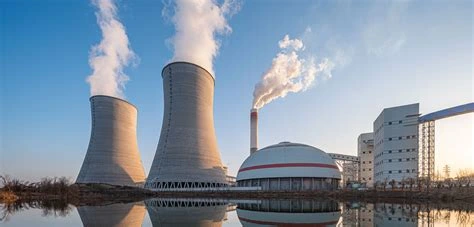
Thanks to intense lobbying efforts, the Kremlin has succeeded in securing Russia’s state nuclear corporation, Rosatom, as the lead contractor for building Kazakhstan’s first nuclear power plant.
According to several sources in Almaty close to the Kazakh president’s administration, Moscow gained the support of both the Chinese government and the China National Nuclear Corporation (CNNC) to form an international consortium for the project. In addition, Russia has pledged to offer Kazakhstan a loan to finance the construction of the plant.
Initially, President Kassym-Jomart Tokayev and his team leaned toward awarding the contract to the French company Électricité de France (EDF), with the idea of forming a consortium that excluded Russian involvement. “The French side was firmly against including Russia in the consortium,” one source noted.
A Kazakh journalist close to Tokayev’s inner circle, speaking on condition of anonymity, said the Kremlin activated all available mechanisms to lobby for Rosatom’s interests. “Putin personally met with Nursultan Nazarbayev at the Kremlin in late May. While Kazakhstan’s first president has formally retired from politics, he still holds sway over parts of the country’s elite. That meeting may have been a signal to Tokayev: the Kremlin has alternative channels of influence in Kazakhstan,” the source explained.
Beijing also exerted significant pressure on Astana, aiming to block French and other European companies from participating in the project. “China prefers a consortium with Russia — it makes it easier to integrate Chinese specialists into Russian nuclear technology. Beijing is eager to embed itself in Russian atomic projects and squeeze out European and South Korean competitors,” the source added. “Russian nuclear technology is currently outperforming China’s.”
Rosatom’s formal entry into Kazakhstan could significantly bolster Moscow’s position in the region. The construction of the nuclear power plant, estimated to cost between $10 and $15 billion, will likely be financed by Russian state-backed loans. As a result, Kazakhstan will become increasingly dependent on Russian technologies — including nuclear fuel supply, maintenance services, and staffing.
Beyond its core operations, Rosatom will also gain a platform for soft power initiatives aimed at reinforcing Russian influence inside Kazakhstan.