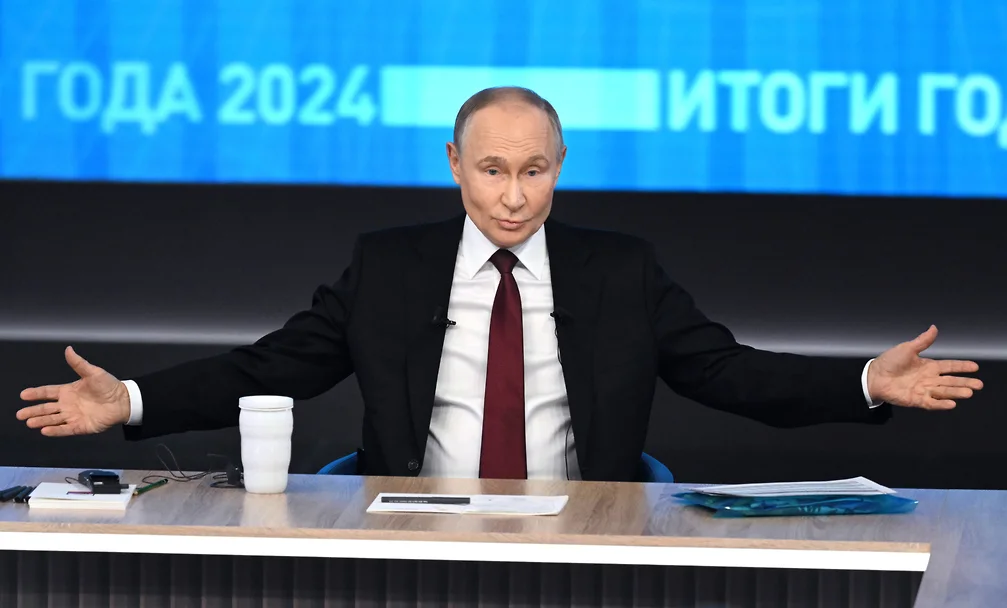
Preparation for the annual press conference and call-in show with the president is already underway. According to presidential spokesman Dmitry Peskov, the event will take place in December, in the second half of the month.
The Kremlin does not expect sweeping criticism of officials during Vladimir Putin’s interaction with citizens. “At the moment there is a pronounced, situational emphasis on addressing the problems of participants in the Special Military Operation—people with disabilities, hospital patients, and recipients of state support,” says a source who works with sociological data in the domestic policy bloc of a major region. “This focus is visible in all the reports regional officials submit to federal authorities. The same logic will likely be reproduced at the press conference.”
For Putin, it will be important to find the right formula for assessing the economy and inflation—and to instill confidence that the government’s social policies will be maintained.
A Moscow political consultant said that Mikhail Kuznetsov, head of the All-Russia People’s Front (ONF), has been taking part in meetings with cabinet members almost every week. “At one of the most recent sessions, he reported that the ONF analyzed 2.6 million citizen appeals. According to him, 46% of respondents were satisfied with the answers they received—five percentage points higher than last year,” the source noted.
Emphasis on social support and a steady economic narrative shapes the question list
According to this person, the Presidential Administration leadership reports to the president about growing trust in the authorities and rising satisfaction with government actions. That factor, sources predict, will be decisive in selecting questions for the press conference. “Don’t expect sweeping criticism of governors,” one interlocutor emphasizes. “The position is as follows: regional and municipal authorities are performing well and addressing current—often local—problems. There are shortcomings, and some will be highlighted, but overall the situation will be presented positively.”
At the same time, the sources acknowledge that many acute issues are “more likely to be swept under the rug than brought up for public discussion,” given their scale and the lack of quick solutions. Nevertheless, certain negative cases—such as missed deadlines for social infrastructure or unfinished projects—may be mentioned.
Healthcare and utility bills dominate complaints; inflation fears linger as sensitive issues are downplayed
Based on appeals received in August–September, the top concerns are not related to the Special Military Operation, but to healthcare and housing and utilities (HUS). Complaints include difficulties booking appointments with specialist doctors and a multiple-fold increase in grievances over HUS tariffs, including incorrect billing by some management companies.
Other hot-button issues include inflation and rising prices. “There is a clear public demand for slowing inflation, even artificially,” the interlocutor observes. “People with lower incomes support price caps on essential goods. Such measures are already in place, but there is a call to expand them.”
In addition, the agenda still includes questions about the “Max” messenger app, the utilization (recycling) fee, and other government decisions. However, according to the sources, in these cases the head of state is likely to simply reaffirm that the course chosen is the right one.
Surprises are possible, experts say, but they will likely concern only specific “negative cases” and serve as elements of bureaucratic infighting. “Overall, the line is clear: the state is operating effectively—especially on issues related to the Special Military Operation,” the source concluded.