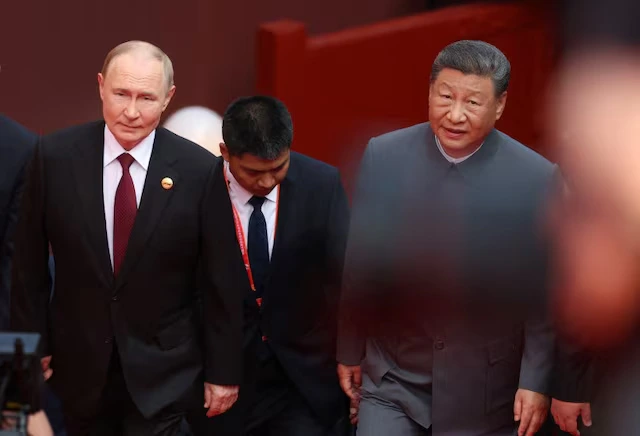
Chinese leader Xi Jinping is preparing to host Vladimir Putin less than a week after U.S. President Donald Trump’s visit. According to Reuters, Beijing is seeking to present itself as a predictable center of global diplomacy at a time of wars, trade tensions and energy instability.
For Putin, this will be his 25th trip to China. Moscow and Beijing are portraying the two-day visit as confirmation of their “all-weather” partnership, despite Western pressure on China to use its influence over Russia to help end the war in Ukraine.
Beijing Projects Stability Amid Global Crises
Beijing continues to describe itself as a neutral party and potential mediator in the conflict. Moscow, meanwhile, stresses that Russia and China support each other’s “core interests.” In practice, this means that energy, trade and long-term supplies of Russian commodities to China are expected to feature prominently in the talks, as Moscow remains under Western sanctions.
According to Reuters, Ian Storey of Singapore’s ISEAS — Yusof Ishak Institute said the Xi-Putin meeting is meant to show the outside world that the strategic partnership between Moscow and Beijing remains a cornerstone of both countries’ foreign policies. He argued that U.S. attempts to drive a wedge between them are unlikely to succeed.
Putin’s visit follows Trump’s trip to China, which produced positive diplomatic optics but few major commercial agreements. Xi described relations with Washington as one of “strategic stability,” effectively contrasting that approach with the earlier U.S. formula of “strategic competition.”
For China, the sequence of high-level visits is a way to reinforce its image as a power capable of speaking to all sides and maintaining a consistent long-term line, while the United States struggles to end the war in Ukraine and manage the conflict with Iran, which has disrupted global energy flows.
Energy Remains the Key Practical Dimension of the Alliance
China’s relationship with Russia remains a major source of concern for the West. Reuters cites Storey as saying that expecting Xi to pressure Putin into ending the war is unrealistic: China does not have that level of influence over the Kremlin, and a Russian defeat in Ukraine would weaken Putin’s position — an outcome Beijing has little interest in encouraging.
China, for its part, says it has not supplied lethal weapons to either side in the conflict and strictly controls exports of dual-use goods. Western analysts, however, believe Beijing will continue to provide Moscow with diplomatic cover, economic support and access to technologies that may have both civilian and military applications.
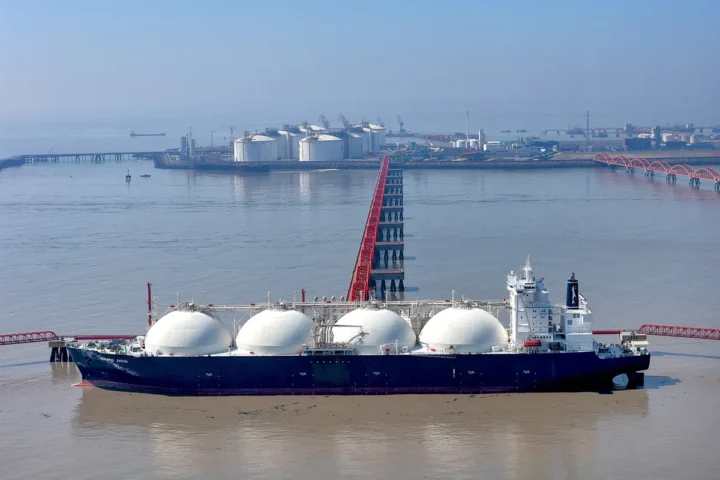
According to Reuters, energy is expected to be one of the central practical issues in the talks. One of the main questions remains the Power of Siberia 2 gas pipeline. Russia and China previously agreed to build it, but they have still not settled the price. Against the backdrop of energy supply disruptions linked to the conflict around Iran, Moscow may try to present the project as a reliable long-term gas source for China.
Beijing, however, is unlikely to abandon its diversification strategy. China may continue talks with both Russia and Turkmenistan, seeking flexible supply terms while avoiding a rushed decision on price. Experts say price negotiations over Power of Siberia 2 could drag on for years.
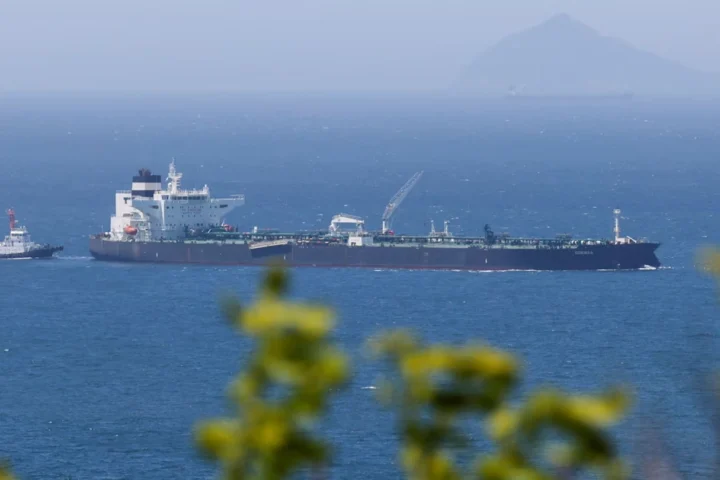
China is already the largest buyer of Russian oil, both through pipelines and by sea. Despite Western sanctions, independent Chinese refiners continue to buy Russian crude, often settling transactions in yuan. In 2025, Russia also agreed to increase oil supplies to China via Kazakhstan by 2.5 million tonnes a year.
The Xi-Putin meeting will therefore be not only a symbolic response to Trump’s recent visit, but also an attempt to consolidate the practical foundations of the Russia-China partnership — from diplomatic support to energy, where Moscow is increasingly dependent on Asia and Beijing is seeking to use that dependence on its own terms.
This article was prepared based on materials published by Reuters. The author does not claim authorship of the original text but presents their interpretation of the content for informational purposes.
The original article can be found at the following link: Reuters.
All rights to the original text belong to Reuters.