Russia’s public attention to the war in Ukraine has fallen to its lowest level since tracking began, according to an April survey by the Levada Center, underscoring signs of fatigue as the conflict drags on with no clear expectation of either a swift peace or a decisive victory.
In April 2026, 43% of respondents said they were closely following developments around the war in Ukraine, the lowest reading recorded by the pollster. Of those, 16% said they were following events “very closely,” while another 27% said they were watching them “fairly closely.” A further 37% said they were following the situation without much interest, and 20% said they were not following the war at all.
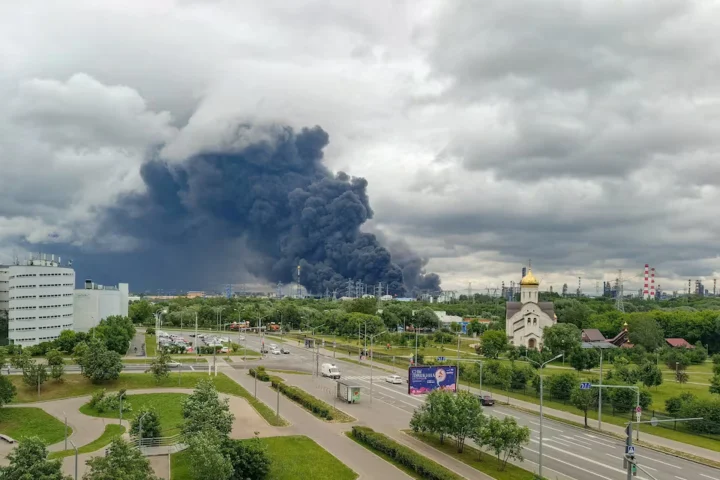
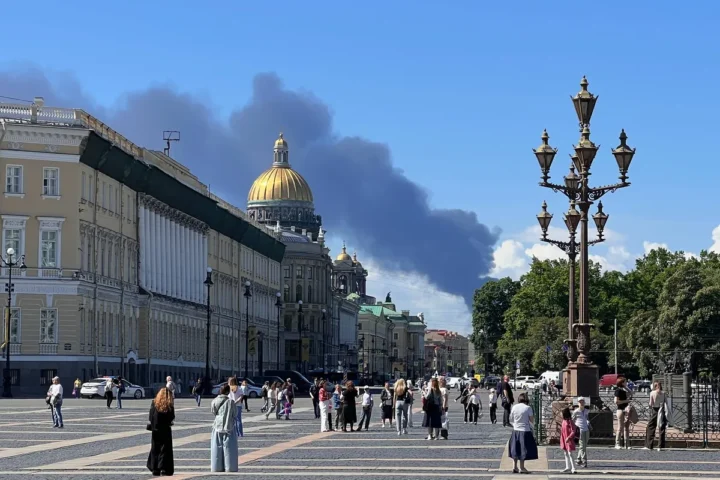
In an open-ended question about the main events of the month, only 8% of respondents mentioned the war or Russian military advances. Another 9% cited drone attacks on Russian territory as the most memorable event. By contrast, the situation in the Middle East was the most frequently mentioned topic, named by 15% of respondents.
Support for the Army Weakens as More Russians Favor Talks
Support for the army remains high but has weakened. According to the survey, 69% of respondents said they support the Russian armed forces, including 38% who said they “definitely” support them and 31% who said they “mostly” support them. That is down 11 percentage points from May 2025. The share of those who do not support the army rose from 13% to 21%.
Support was below average among respondents under 25, residents of small towns, those who believe the country is moving in the “wrong direction,” and people who get their information from YouTube channels.
A majority of respondents — 62% — said Russia should move toward peace talks, while 27% supported continuing military operations.
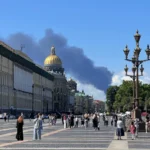
Sociologists interviewed on the issue said public attention to the war is declining because society sees little prospect of either an imminent peace or a convincing victory. Reports about the capture of individual settlements appear to carry less weight in public perception, while drone strikes on Russian cities are becoming a more visible factor shaping public sentiment.
They also linked the growing share of war opponents to the exhaustion of the “winner effect.” Part of society, they argue, is beginning to distance itself from the conflict as the fighting becomes increasingly prolonged and drone attacks on Russian territory become more frequent.
Kremlin Balances Victory Rhetoric With Signals on Talks
The Kremlin appears to be reading those signals. It was no coincidence that Vladimir Putin sent the public two different messages on May 9. In his Victory Day parade speech, the Russian president declared that victory had been and would always be Russia’s. Later that evening, he said the war was nearing its end and did not rule out a meeting with Volodymyr Zelenskiy.
In the near term, the Kremlin is likely to continue maneuvering between these two narratives. At the same time, both Moscow and Kyiv are expected to keep testing escalation options, combining offensive operations with strikes in the enemy’s rear — effectively treating them as a second front. Some analysts do not rule out that the sides could move toward negotiations by the autumn.
Still, sources say polarization inside Russian society is intensifying. Among some men over 30, demand is growing for a “total victory.” Yet the majority continues to favor ending the war and moving toward negotiations. For sociologists, the central question is what will prove more powerful: social fatigue, or a deepening split that could generate new internal conflicts.