A Gulf order begins to fragment
The UAE’s decision to leave OPEC is more than a technical dispute over production quotas. It is another sign that the old petrodollar order is fading — though not yet proof that a petroyuan era has arrived.
The Emirates increasingly resemble a kind of “Britain of the Middle East”: small in demographic and military terms, but highly active through proxies, asymmetrical influence and strategic ports. Abu Dhabi has built networks in Somalia, Sudan, Yemen and Libya, despite having no army or navy comparable to its ambitions.
What it does have is oil, money and poorer allies willing to fight for access to royal patronage.
Why OPEC matters less to Abu Dhabi
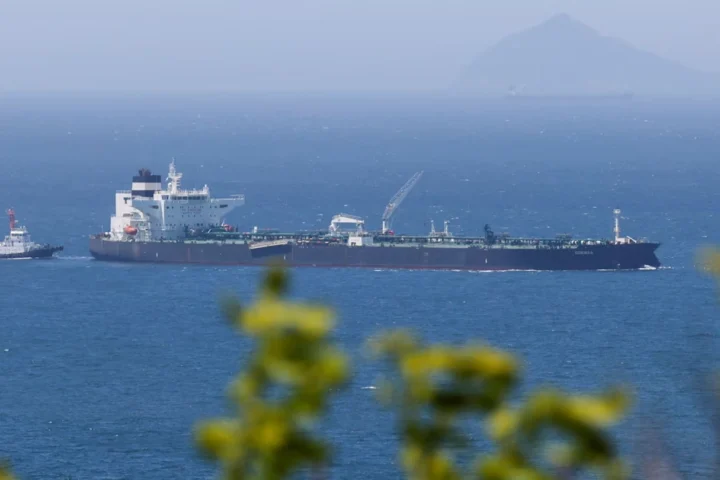
The UAE can export about 1.5mn barrels of oil a day through Fujairah, bypassing the Strait of Hormuz. Its total production capacity is close to 5mn barrels a day, and much of that can be directed to export markets. Its OPEC quota, by contrast, stood at roughly 3.5mn barrels a day.
That gap explains the logic of departure. For Abu Dhabi, OPEC increasingly looks less like a source of protection and more like a constraint.
For decades, OPEC was inseparable from the petrodollar system. But the UAE’s immediate strategic need is not dollar discipline. It is air defence against Iran. Oil can be sold in dollars, yuan or any other currency if the security architecture is strong enough.
And that air defence could come, directly or indirectly, from Israel. This makes a renewed push around the Abraham Accords between the UAE and Israel not only plausible, but likely in the near term.
The Gulf is no longer a single bloc
The Arab monarchies of the Gulf are entering a period of fragmentation.
The UAE is moving toward deeper security alignment with Israel. Bahrain remains effectively a US dominion in the region. Kuwait is trying to revive a more pan-Arab posture and has taken a much harder line against Israel. Qatar is betting on Turkey. Oman continues to balance between Washington and Tehran.
The broader Muslim street, or ummah, now threatens the stability of only two royal dynasties in a serious way: the Hashemites in Jordan and the Saudis in Saudi Arabia.
That is where pressure will concentrate — from Iran, which may seek to stir Islamic revolutionary sentiment, and from nationalist pan-Arab currents reminiscent of the old Ba’athist movements that once overturned regimes in Iraq and Syria.
As the US military presence in the region weakens, such scenarios become less theoretical.
Why the UAE feels safer than Saudi Arabia
The UAE is relatively insulated. Over the past 25 years, its population has increased more than fourfold — not mainly through local birth rates, but through the arrival of wealthy migrants and expatriates who have little interest in an Islamic revolution.
Saudi Arabia is different. It has a population of about 36mn, much of it local, and a strong Wahhabi current embedded in society. Jordan is also vulnerable: a significant part of its population descends from Palestinian refugees, with political emotions to match.
The Middle Eastern geopolitical cluster is cracking. Each player in the new Great Game is positioning itself for a share of the spoils.
Israel may gain deeper ties with the UAE. Turkey may strengthen its axis with Qatar. Iran may find a new alignment with Oman. Pakistan may become more important to a wealthy Saudi Arabia increasingly dependent on external military guarantees.
Whether inviting Pakistani forces into the kingdom would one day prove a fatal mistake for Riyadh is an open question.
China, meanwhile, stands to benefit from the regional strengthening of Iran and from any gradual move toward oil settlement in yuan.
And what does the US gain from this war? That is the central question. Before the conflict, Washington already held most of the strategic cards in the Middle East. By the logic of power politics, it was not the actor that needed to start a war.
The petrodollar is no longer the foundation of dollar power
The petrodollar belongs to the past.
The influence and status of the US dollar today are determined less by Arab monarchies than by the industrial surpluses of East Asia — China, Taiwan and South Korea.
Saudi Arabia and its Gulf neighbours have lost their old status as the world’s bankers. Their state budgets increasingly require oil prices above $90 a barrel. That has turned many OPEC exporters from net creditors into borrowers, reducing their structural contribution to global demand for US dollars.
Higher commodity prices hurt Asian manufacturers. But the region’s vast export capacity allows it to absorb such shocks better than almost anywhere else.
The US, meanwhile, is now a net exporter of energy. It is no longer strategically dependent on OPEC in the way it was in the 1970s.
The petrodollar was a phenomenon of that decade. Today’s dollar power rests on something different: the production capacity and savings of Asia.
This is no longer the age of the petrodollar. It is the age of the industrial dollar.