Chinese automakers have reached a symbolic milestone in Europe: in May, they accounted for more than one in ten new cars sold in the region for the first time. According to Bloomberg, this shows that competition with China is no longer a future challenge for Europe’s auto industry — it has become a present-day market reality.
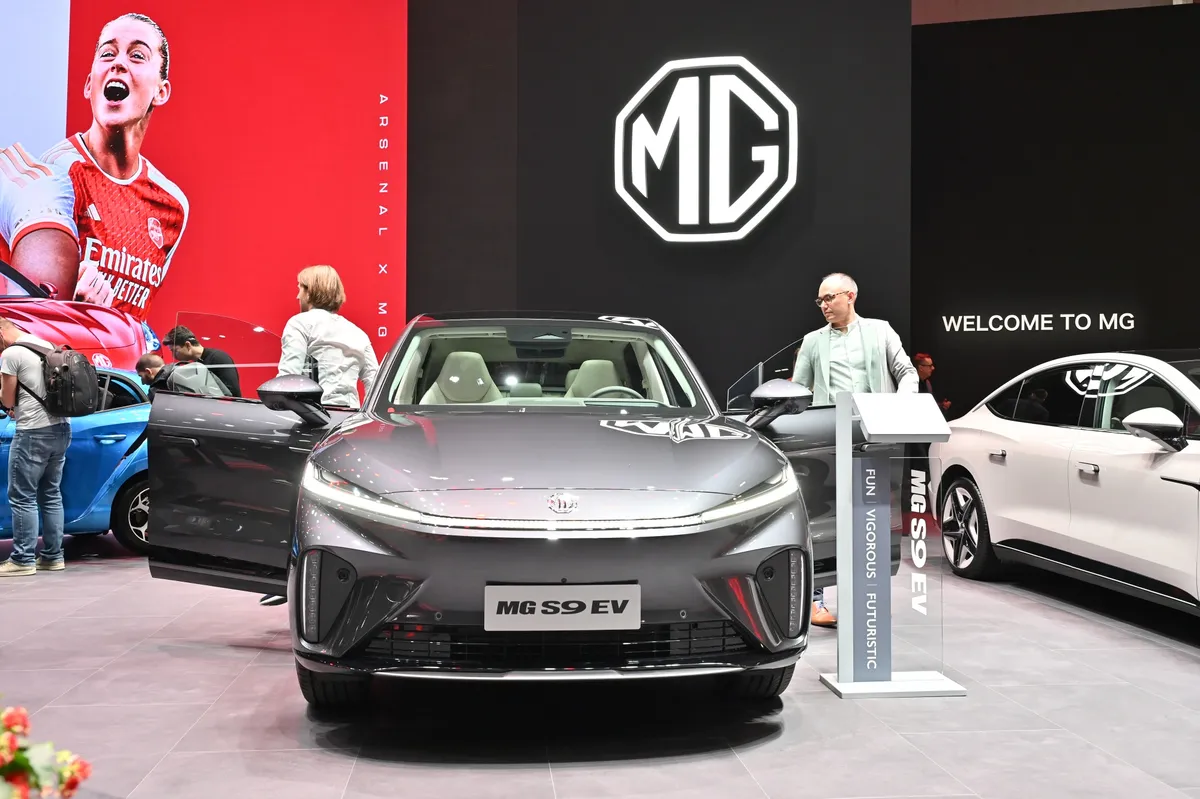
According to analysts at Dataforce, Chinese brands captured 11% of Europe’s new-car market. The main driver was hybrids and plug-in hybrids, including models such as the MG S9 SUV. In the segment of new hybrid cars, Chinese manufacturers took almost a quarter of all sales. Demand for fully electric models from China also continued to grow.
The key advantage of Chinese companies is a combination of price, equipment and speed of adaptation. As Dataforce notes, Chinese brands understood earlier than many Western competitors that European consumers were not yet ready to switch en masse to fully electric vehicles. As a result, they expanded their lineups more quickly with hybrids and plug-in hybrids, offering buyers a more familiar compromise between a conventional car and an electric vehicle.
Price remains the main argument. Chinese brands offer European buyers “more car for the money”: more power, more features and often a more attractive balance between cost and equipment. For example, when comparing seven-seat SUVs, buyers of the Chinese-made MG S9 get both savings and more horsepower compared with the Volkswagen Tayron, while the model’s quality remains competitive, according to analysts.
For BYD, SAIC Motor and other Chinese manufacturers, Europe is becoming an increasingly important direction for expansion. In their domestic market, companies are facing oversupply, steep discounts and weakening consumer demand amid a property crisis and a fragile labor market. Europe is therefore turning into a necessary external outlet for sales.
The European Union is already trying to protect local manufacturers such as Volkswagen, Stellantis, Renault and others. However, the additional tariffs introduced by Brussels in 2024 apply only to fully electric vehicles made in China. Trade barriers are lower for hybrids, which is why deliveries of these models are growing faster than sales of battery-only cars.
This loophole is becoming increasingly visible. Chinese automakers can rely on a wide range of domestic advantages: subsidies, access to cheap land, preferential financing and other forms of support that reduce their production costs. At the same time, they can also benefit from certain demand-stimulus measures in Europe.
In Germany, for example, the government has launched a new €3 billion support program for zero-emission vehicles. The subsidies apply not only to electric vehicles but also to plug-in hybrids and cars with range extenders. For lower-income households, support can reach as much as €6,000.
Chinese brands, especially MG and BYD, have been among the main beneficiaries of this program. According to WirtschaftsWoche, after the subsidies were launched, they recorded the strongest sales growth in Germany — averaging between 50% and 75%. For European manufacturers, this is a painful signal: measures designed to support green transport may end up strengthening not local players, but their Chinese competitors.
Meanwhile, Europe’s auto industry continues to struggle with the transition to electric vehicles. Manufacturers are pushing to soften EU CO2 emissions targets, as consumers remain reluctant to buy expensive battery-powered cars, especially against the backdrop of an uneven charging infrastructure. As a result, companies find themselves caught between regulatory pressure, rising costs and cheaper competitors from China.
Citigroup analysts believe that European policy has created an imbalance: local automakers are heavily regulated at every level, while foreign competitors do not yet face a comparable regulatory cost burden. In their view, the EU needs to protect its own auto industry in the same way it protects the steel sector.
Brussels appears to be moving in that direction. According to Handelsblatt, the EU is preparing to extend additional tariffs to Chinese hybrid cars as well. If that happens, Europe will effectively acknowledge that its current tariff policy has not been sufficient: Chinese manufacturers quickly adjusted their model ranges and found a way around restrictions on electric vehicles.
For European companies, the problem is broader than Chinese imports alone. They are being squeezed simultaneously by high energy and labor costs, a weak home market, US tariffs and falling sales in China. All of this is hitting margins. BMW warned last week that it may make hardly any profit from its carmaking business this year.
The breakthrough of Chinese brands is especially visible in the UK, where there are no special tariffs against Chinese cars. BYD, MG, Omoda and Jaecoo are rapidly expanding their presence. In May, Chery’s Jaecoo 7 SUV became the fourth best-selling model in Britain, while Chinese automakers’ share of the UK market exceeded 16%.
So far, Chinese companies have gained the strongest foothold in the UK, Italy and Spain. But they are now also gaining ground in France and Germany — the key markets of the European auto industry. At the same time, they are seeking not only to sell cars in Europe but also to build a manufacturing footprint there. This is especially sensitive for local manufacturers, which are themselves struggling with excess capacity.
For Europe, China’s advance represents a double challenge. On the one hand, local brands must accelerate electrification and comply with climate rules. On the other, they have to compete with manufacturers that offer cheaper and better-equipped cars, respond more quickly to demand and know how to exploit gaps in regulation.
That is why May’s 11% milestone looks like more than just a statistical detail. It is a signal of a shift in the balance of power. Chinese cars are no longer a niche product in the European market. They are becoming a mass-market alternative — forcing Europe’s auto industry to defend not only its market share, but also the very model of competition on which it built its advantage for decades.
This article was prepared based on materials published by Bloomberg. The author does not claim authorship of the original text but presents their interpretation of the content for informational purposes.
The original article can be found at the following link: Bloomberg.
All rights to the original text belong to Bloomberg.