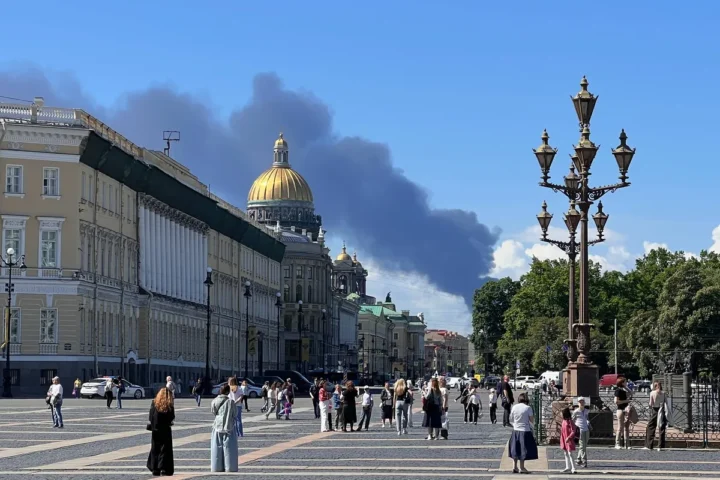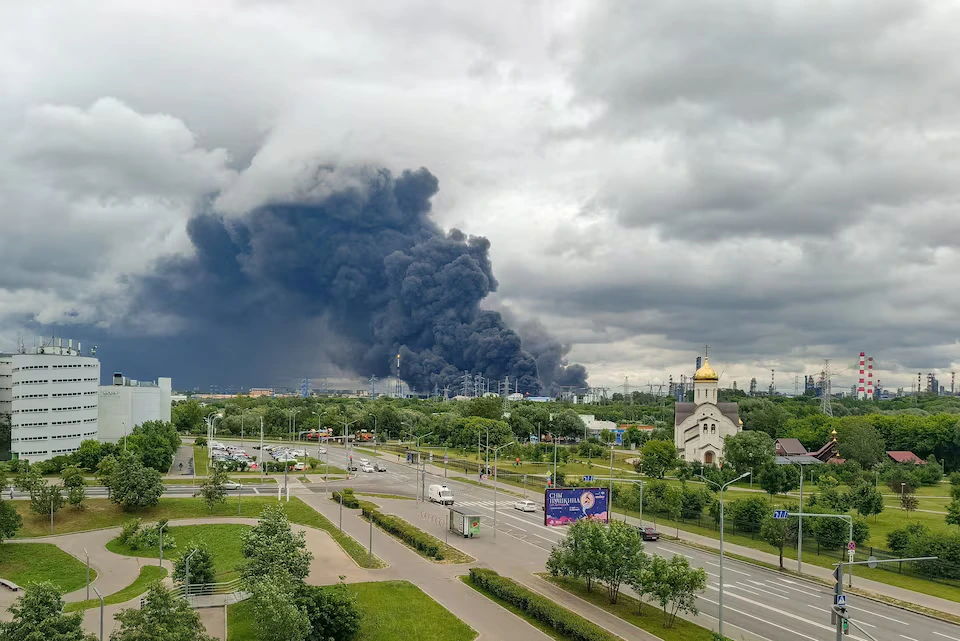
Mass drone raids on the oil refinery in Kapotnya, now continuing for a second day, as well as collateral damage caused by falling debris hitting residential buildings and shopping centers, are creating conditions for the destabilization of everyday life in the Russian capital.
According to a political strategist, “this resembles the situation with the apartment bombings in the capital in the autumn of 1999, which led to a transfer of power in the Kremlin against the backdrop of Boris Yeltsin’s weakness and the country’s leadership having no clear options for resolving the crisis in the Caucasus.”
Unlike in the regions, heightened anxiety in Moscow can destabilize the work of both private and state institutions. “If mass Ukrainian drone attacks on Moscow continue in the near future, this will indicate the existence of a scenario aimed at putting pressure on the Kremlin by destabilizing public sentiment. It should also be taken into account that Putin will be forced to limit his presence in the Moscow region, which may further aggravate the management crisis,” said a Moscow-based political analyst.
A military expert, who requested anonymity, noted that some optimists cite Kyiv as an example, arguing that drone raids have little impact on the stability of power. According to him, “Kyiv and Moscow live in completely different conditions. Kyiv is under martial law and exists in wartime conditions; society is fully mobilized. Moscow, in the fifth year of the ‘special military operation,’ continues to live as a peacetime city where only occasional man-made incidents occur. Neither society nor the authorities are operating in a martial-law mindset or expecting critical risks. As a result, Muscovites are more susceptible to anxiety and even panic. A constant information background of emergencies and man-made disasters linked to explosions at civilian facilities destabilizes public sentiment.”
Federal and local authorities urgently need to change their approach to managing the information agenda: restrictions on the spread of information generate a wave of rumors and effectively create a monopoly for Ukrainian sources of information.